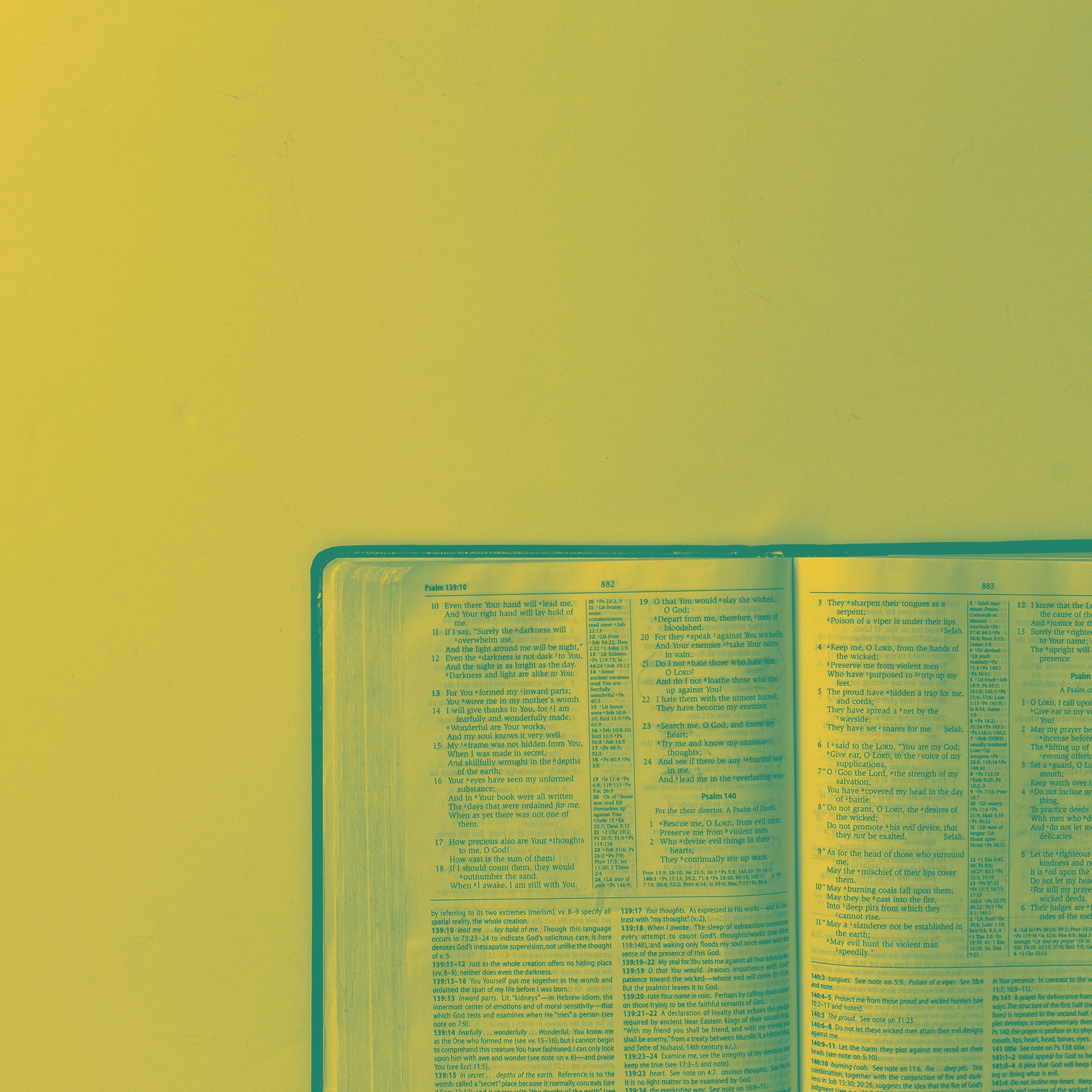
Psalm 51 is written after David had committed that double sin of adultery with Bathsheba and then murder of her husband. It's unthinkable, and yet he comes in honest and humble confession to God. And one of the things that we see as a result of that confession is Psalm 51 is a place where you get one of the most accurate definitions of what sin is about in all of Scripture because that's what David is confessing.
There's no "What if," there's no, "If only," there's no argument for his own righteousness, there's no blame-shifting; it's just honest confession. And notice how Psalm 51 begins:
Have mercy on me, O God,
according to your steadfast love;
according to your abundant mercy
blot out my transgressions.
Wash me thoroughly from my iniquity,
and cleanse me from my sin!
Now, I don't know if you noticed, but in that first couple verses of this Psalm, David uses three different words for sin. And it's important to understand what these words mean.
The first word is transgression. Transgression is rebellion. Transgression is a willing stepping over God's boundaries. When you're looking for a place to park, and you see the "No Parking" sign, and you park there anyway, that's transgression. You know what you're doing. You're willingly breaking the law because your comfort, saving yourself seven steps, is more important than doing what's right. That's transgression.
Then there's the word iniquity. The reason we transgress is because we have iniquity inside of us. Iniquity is a word for moral impurity. It's like pouring tainted milk into good milk; all of a sudden that milk is impure. And that's what sin does. There are impurities still wafting around in our hearts. Yes, we've been justified - that's named righteous before God - but our sin hasn't been fully eradicated yet, so there are moral impurities inside of us.
And then the third word is sin. The word sin means 'inability.' People say it's pulling the arrow back and missing the target; that's not what it means. It means pulling the arrow back as far as I can, and my arrows always fall short of the target. I can't reach the target; I'm unable.
So, sin produces rebellion, sin produces moral impurity, and sin produces inability.
But David goes on. He says, you have to know that all sin is vertical. No matter who is being harmed by your sin, sin is always sin against the authority and the will of God. David says everyone is born in sin. That means that my biggest problem is not the world I live in, or the people I live around, or the circumstances in my life; my biggest problem is me. David says sin is a matter of the heart. It's not a matter of my history first, not a matter of my family, not a matter of location, not a matter of situation. My biggest problem lives inside of me, not outside of me.
And so, what is my only hope? I need something that I can't give myself. I need God's cleansing grace. "Create in me a clean heart" - cleanse me. Sin is never defeated by denial, by minimizing, by blame-shifting, by arguing for your righteousness. My only hope in the face of my transgression, iniquity, and sin is forgiving, delivering, empowering grace. Remember that grace is found in the person and work of Jesus!
Questions for Personal Reflection or Group Discussion
1. The sin in our lives will always produce rebellion, moral impurity, and inability. Why do you think it's important to dive into the "anatomy" of sin as a believer? As David describes sin in three different ways here at the beginning of Psalm 51, process what he must have been experiencing as he confessed before the Lord. The sins of adultery and murder are specific and "big" sins in our eyes, so why do you think it's often so difficult for us to come to God and name our specific sins with truthfulness before the Lord as David does? Why is owning our sin and not blame-shifting such an important part of confessing to the Lord?
2. Why is sin always vertical and against the authority and will of God even though others are harmed by our sin? What do you think it means to be born in sin? How does being "born in sin" shape your perspective on humanity? What does it mean about the natural state of your rebellion against God from the very beginning of your life? How does your need to be rescued from the sin you were born in point you to a Rescuer?
3. Why are you your biggest problem and not the world you live in, the people around you, or the circumstances in your life? If everything in your life (including your choices, thoughts, actions, words, etc), is an overflow of your heart and your heart is in rebellion against God, where can you find true and lasting hope? When David came to the conclusion that his biggest problem was himself, where did he find true and lasting hope? Why are we today in a better position to understand God's grace in comparison to David's perspective in Old Testament times?
Conversation Prompts to Use with Children
For Younger Children:
• What do you think it means to sin? Why is sin such a bad thing? The Bible says "we are born into sin." What do you think that means?
• If I poured a little bit of poison into a big container of milk, would you want to drink it? Why would that milk be dangerous even if it was just a little bit of poison in a huge container of milk? If our hearts are like that container of milk and that poison is sin, what do you think is going on with our lives on the inside? How does that help you see that we have a big problem that needs to be solved? Who is the solution to our poison problem? Why is Jesus the only one capable of solving our poison problem?
• When we get caught for doing something wrong, why is it so easy to blame someone or something else, even though most of the time it's our own fault? Can you think of a time you did this recently? Can you remember a time when I did this recently? What do you think our biggest problem is when we're tempted to blame others for our sin? Why is it such good news that Jesus will always receive us back with open arms when we admit our sin and take responsibility for it?
For Older Children:
• Why is sin more than just the bad things we do? How has sin affected our lives? Our environment? The people and relationships we have? The physical world around us? If the Bible says we are born into sin, what are the personal consequences of that for you and me?
• Why do you think the Bible says that when we sin, it's against God and God alone? How does that make sense? If it's true and we've offended God with our continual sin and sinful nature, do you feel a sense of hopelessness? How can that feeling of hopelessness drive us to search for real hope? If we're needy people who require help because of our sinful condition, how do you think God views us in that condition? Is God's view of us good news or bad news?
• When we get caught for doing something wrong, why is it so easy to blame someone or something else, even though most of the time it's our own fault? Can you think of a time you did this recently? Can you remember a time when I did this recently? How can we help one another to make better choices in the future and simply "own it" when we sin, and admit our neediness of a Savior to rescue us from our sin/sinful nature?
You have permission to print, repost, share, distribute, and translate this resource as long as you credit Paul Tripp as the teacher, do not charge for this resource, and do not alter the content in any way. If you require an exception or special permission, please email Info@PaulTripp.com.