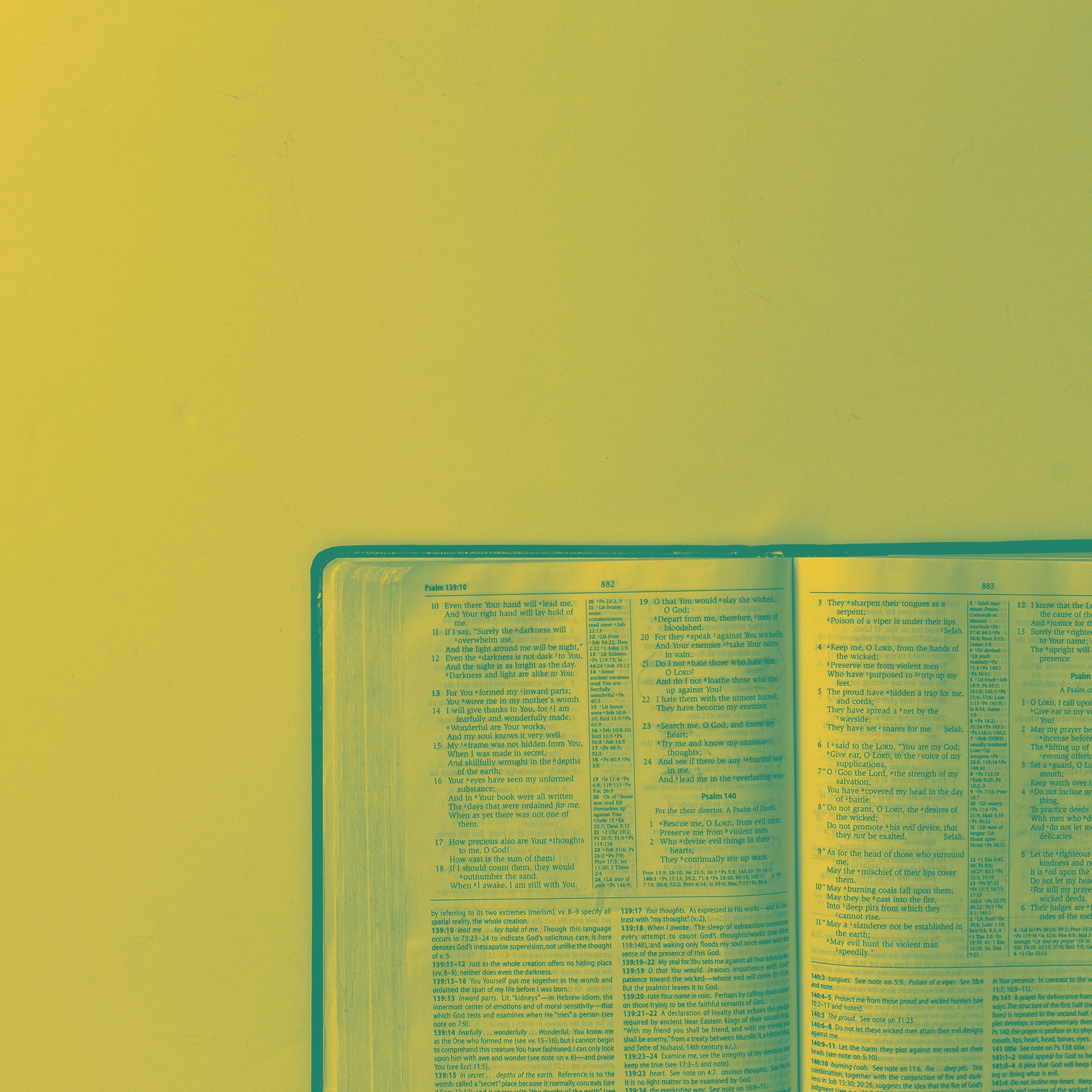
Well, I want to look with you at Psalm 42, and Psalm 42 is about the importance of confronting yourself. Do you confront yourself? Or do you go with you no matter what? Are you your biggest fan? Do you applaud everything you think? Everything you do? Are you defensive when someone questions what you say or what you do?
One of the important commitments of faith is to be committed to self-confrontation. Let me read some of Psalm 42 for you:
As a deer pants for flowing streams,
so pants my soul for you, O God.
My soul thirsts for God,
for the living God.
When shall I come and appear before God?
My tears have been my food
day and night,
while they say to me all the day long,
"Where is your God?"
These things I remember,
as I pour out my soul:
how I would go with the throng
and lead them in procession to the house of God
with glad shouts and songs of praise,
a multitude keeping festival.
(Now listen to this)
Why are you cast down, O my soul,
and why are you in turmoil within me?
Hope in God; for I shall again praise him,
my salvation and my God.
In Psalm 42, we are invited to eavesdrop on a private conversation that the psalmist is having to himself, and he's saying to himself words of self-confrontation, "What's the matter with you? Why are you discouraged? Why do you have such turmoil inside of you? Why aren't you hoping in God?"
Now, here's what you need to understand: no one talks to you more than you do. You're in a constant conversation with yourself, and the things you say to you, about you, about God, about life, then shape the way you live.
We have a tendency to take ourselves off the hook, to argue for the right of what we're thinking, even if what we're thinking is wrong. And sometimes it's very important to be very aware of what you're thinking, and to step back and confront those thoughts that are going to discourage you, are going to weaken your faith, are going to bring doubt to God, and obviously, then, shape in a wrong way, the way that you live.
There's a pattern of self-confrontation in this Psalm, what it looks like. Here's the first thing: be humble enough to be willing to confront yourself. Don't be your biggest fan. Don't always be your own inner lawyer. I can say this because I have an inner law firm.
Second thing after confrontation: commit to hope in God. You see, when you fail to confront yourself, that's a system of hope in yourself. I don't want to do anything that would break my hope in myself; the way you break that is by putting your hope in God.
Third thing: remember God's constant goodness. No matter how great your sin, God will never turn his back on you. He will never walk away in disgust. He will never wish that you weren't his child. He'll never think that you were one of his bad choices because God doesn't make bad choices. Remember his goodness.
And then fourth: resist doubt. Listen, here's the point. You and I are blessed with the righteousness of Jesus. Jesus lived a perfect, righteous life on our behalf. He perfectly measured up-listen to me-precisely because God knew that we would not measure up.
So, confrontation looks like this. Be willing to admit and confess your sin, weakness, and failure. Quit building up hope in you and begin to have hope in God. Remember his unshakeable goodness toward you and resist doubt that would drive you inward rather than upward toward God, to put your rest in him!
Questions for Personal Reflection or Group Discussion
1. Take a moment to reflect on the typical conversations you have with yourself on a daily basis. In what ways do you normally take yourself off the hook and argue for the right of what you're thinking, even if it's wrong? Try to think of specific examples. How are those conversations with yourself literally shaping the way you think, speak, act, and live daily? Again, be specific with your personal examples. How have you been your own biggest fan? Your own lawyer? Your own law firm?
2. In what specific ways within your life are you hoping in yourself instead of hoping in God? Meditate on different aspects of your life like your marriage, job, kids, extended family relations, neighbor connections, etc. In a healthy way, how can you confront that system of hope in yourself and replace it with hope in God?
3. In what ways are you telling yourself (or tempted to tell yourself) that your sin makes God want to turn his back on you, walk away from you in disgust, wish you weren't his child, and/or think you were a bad choice? How can remembering God's goodness replace the negative narrative you're speaking to yourself with his truth?
4. In what ways does doubt drive you inward instead of upward toward God? Try to recall specific examples from your life when doubt did this in you. Now, how can remembering that the perfect, righteous life of Jesus was attributed to us as his children be the key to resisting doubt?
Conversation Prompts to Use with Children
For Younger Children:
• What are you thinking about right now? Share it with me. If you were to make a guess, how many times a minute do you think things to yourself without saying anything out loud? Who do you think talks to you more than anyone else? Why might the answer be "you" when I ask who talks to you more than anyone else? What kinds of things do you say to yourself that are fun, funny, or right? What kinds of things do you say to yourself that might be unkind, unfunny, or wrong? Why do you think it's important to pay attention to the things we say to ourselves?
• Why might hoping in yourself be a bad thing when everyone else seems to always be saying that hoping in yourself is a good thing?
• How can we help each other remember that God is always good and worthy of our trust? Let's make a list together and write down some ways we can remind each other of God's goodness and trustworthiness.
For Older Children:
• If you had to make a guess, how many times would you say that you silently talk to yourself every hour? Now, just by the numbers, does anyone talk to you more than you do? What are some of the things you say to yourself on any given day? In the privacy of your own mind, do you think you're prone to defending yourself more often than not? I know silently defending yourself can feel good, but why might that actually be a bad thing?
• I know that our culture communicates that hoping in yourself is always a good thing, but what do you think? Could hoping in yourself be a negative thing or a potentially horrible thing? Why? Why would it be a good thing to practice shifting our hope from ourselves to hoping in God? Why is it better to hope in him instead of ourselves?
• How could confessing that we are weak, sinful, and a failure be a good thing? Even though you are weak, sinful, and prone to fail, God still picked you. He never turns his back on you, never walks away from you in disgust, never thinks you were a bad choice...how does that make you feel? Why is it always a good idea to turn upward toward God instead of inward toward ourselves?
You have permission to print, repost, share, distribute, and translate this resource as long as you credit Paul Tripp as the teacher, do not charge for this resource, and do not alter the content in any way. If you require an exception or special permission, please email Info@PaulTripp.com.