I can remember every Christmas my mom and dad would take us to hear the Messiah--that great celebration of the person and work of Jesus--and it culminates with the Hallelujah Chorus. And the tradition is that no matter where the crowd is, no matter what concert hall, when the Hallelujah Chorus begins, the entire audience stands. And I remember my mom saying, "After you've heard the whole Messiah, there couldn't have been any other thing written than the Hallelujah Chorus. It's the only way this thing could have ended."
Well, I want to say the same thing about Psalm 150. It is the best possible ending to this amazing book of the Word of God. I have just been personally blessed, convicted, helped, guided, left in wonder and awe, of the body of truth that's in the Psalms.
We're at the end of our journey through the Psalms. What have the Psalms has shown us?
- We have had Psalms confront us with our self-focus and self-sufficiency.
- We have had Psalms that meet us in our discouragement.
- We have had Psalms remind us that God is still in control.
- We have seen Psalm after Psalm point us to Jesus.
- There are Psalms about parenting, Psalms about temptation, Psalms about confession.
- There are Psalms that expose our foolishness and point us to the wisdom of God.
- We have studied Psalms about what it means to fear the Lord.
- Psalms have told us how to live in a world that has gone bad.
- We have seen God's tender-hearted care for us in the Psalms.
- In the Psalms, we have seen God's zeal to crush evil once and for all.
- The Psalms have pointed us to our need for a Redeemer.
- In the Psalms, we've seen the transformational power of the moral wisdom of God's Word.
- The Psalms have given us a picture of the struggles of faith.
- The Psalms have taught us how to sing and how to pray.
- The Psalms have given us a guide for how the theology of the Word of God should be handled.
There is almost nothing in our lives that hasn't been touched by the Psalms. So, it makes sense that this amazing book of the Bible would end with a song of praise.
Praise the Lord!
Praise God in his sanctuary;
praise him in his mighty heavens!
Praise him for his mighty deeds;
praise him according to his excellent greatness!
Praise him with trumpet sound;
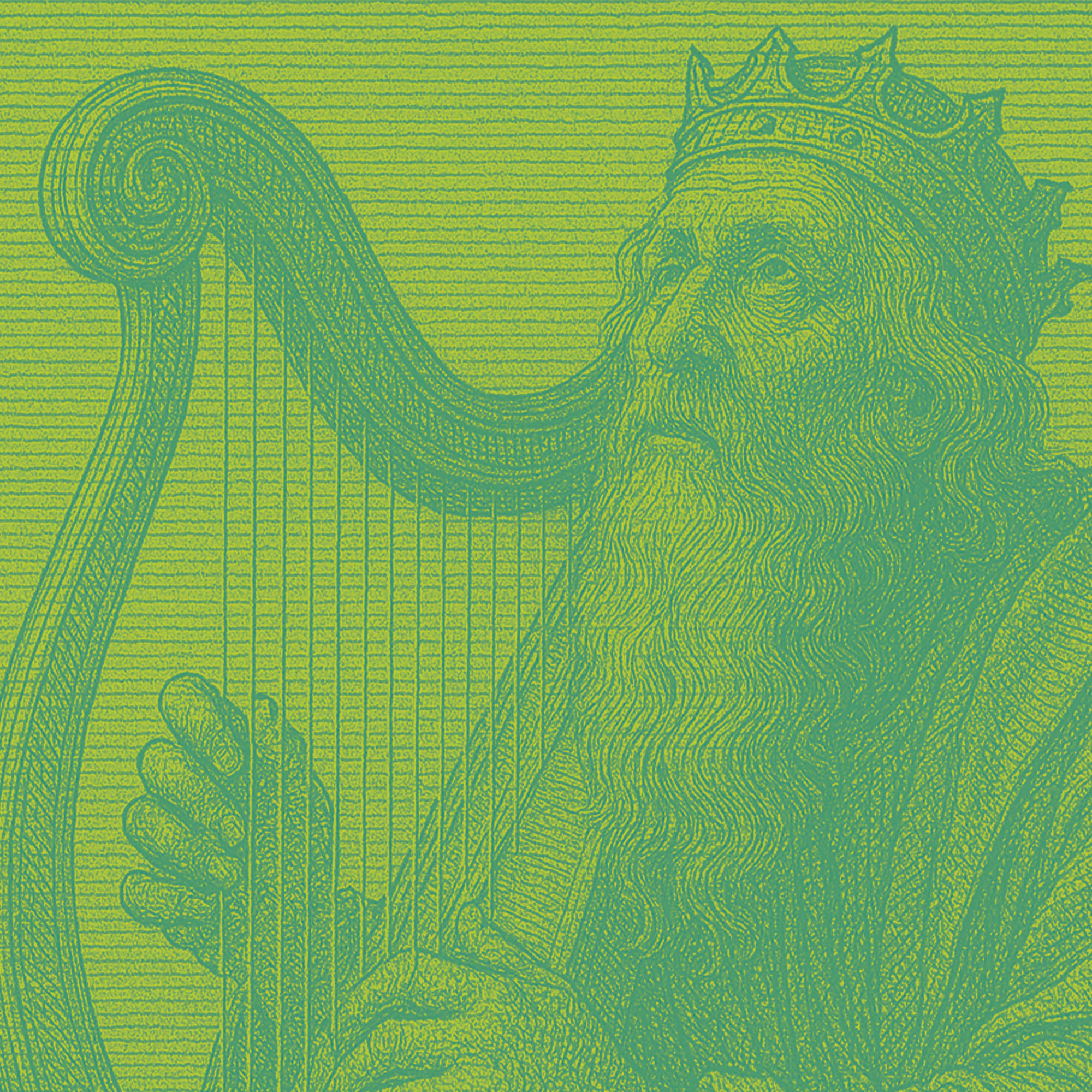
praise him with lute and harp!
Praise him with tambourine and dance;
praise him with strings and pipe!
Praise him with sounding cymbals;
praise him with loud clashing cymbals!
Let everything that has breath praise the Lord!
Praise the Lord!
The Psalms should leave you blown away by God's wisdom, his power, his love, and his faithfulness, his hatred of evil, his kingship, the gift of his Son, his knowledge of you--even to the core of the desires of your heart--and his inexhaustible grace.
So, there is no better, more fitting way to end this magnificent portion of God's Word than this final hymn of praise. It just builds: "Praise the LORD"--and then whip out the instruments, instrument after instrument after instrument, and use them to praise the LORD. Finally, crash the cymbals! And then, as if that's not enough, he just says, "Well, just let everything that has breath praise the LORD. Praise the LORD!
You could not end a study of the Psalms with a better statement than this, "Let everything that has breath, praise the LORD!" May we, you and I, breathe out praise every day because this One is worthy!
Questions for Personal Reflection or Group Discussion
1. Why do you think music is such a powerful and important way of praising God, and why do you think it's significant that the final psalm of the book of Psalms points specifically to musical instruments? Why is it a fitting way to end the book of Psalms with this hymn of praise?
2. How is praising God something that can bring us closer to him? What's the relational aspect of singing praises to him? As you reflect on this psalm and all the psalms that come before it, why is it so important that you personally praise the Lord?
3. How can our extravagant praise actually be a reflection of God's extravagant grace? Why is God worthy of this: "Everything that has breath, praise the LORD!"?
4. Think of the specific things God has done in your life over the last several months that make him worthy of your praise. Write them down and take some time to go through them, point-by-point, and praise him for each one.
Conversation Prompts to Use with Children
For Younger Children:
• Why do you think people stand up and applaud or cheer at the end of a show, presentation, or performance they thought was amazing? What do you think is the best way to communicate how much you loved a performance, presentation, or show? Since the book of Psalms is such a powerful and important book of the Bible, what do you think would be the best way to end it?
• What do you think it means to "praise" something or someone? How does praise show our love and appreciation? What are some ways we can praise God for what he has done? How might our praise be an example of an offering to God?
For Older Children:
• Why is applause so important to participate in if you appreciated a play, performance, show, or presentation? Why do you think music is so important and powerful when it comes to communicating praise? How do you think praise can be directed or communicated to God through the art of music?
• What are some ways we can praise God for what he has done? How might our praise be an example of an offering to God? What are a few things we can praise God for in our lives right now?
You have permission to print, repost, share, distribute, and translate this resource as long as you credit Paul Tripp as the teacher, do not charge for this resource, and do not alter the content in any way. If you require an exception or special permission, please email Info@PaulTripp.com.