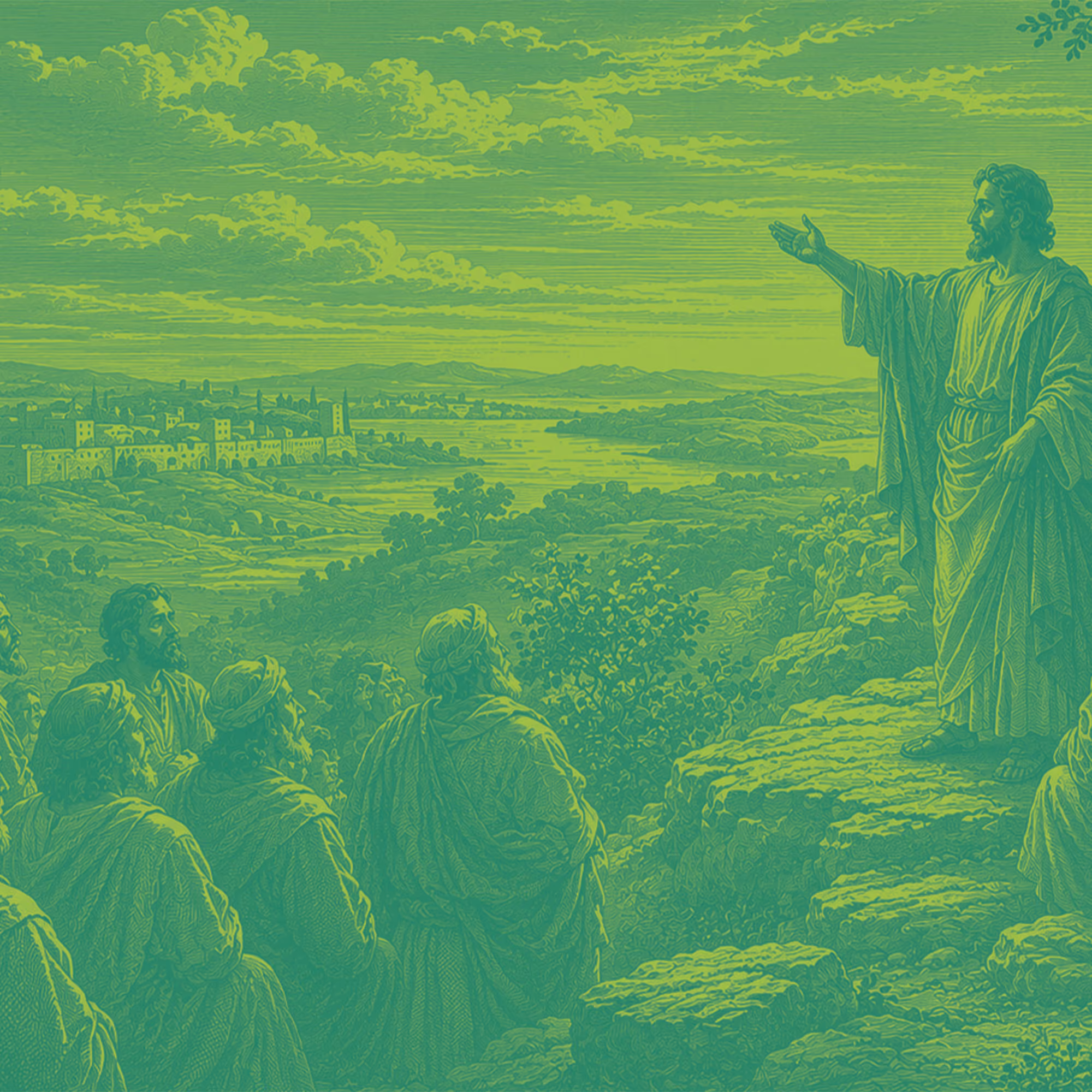
This is Acts 1:12–14.
12 Then they returned to Jerusalem from the mount called Olivet, which is near Jerusalem, a Sabbath day's journey away. 13 And when they had entered, they went up to the upper room, where they were staying, Peter and John and James and Andrew, Philip and Thomas, Bartholomew and Matthew, James the son of Alphaeus and Simon the Zealot and Judas the son of James. 14 All these with one accord were devoting themselves to prayer, together with the women and Mary the mother of Jesus, and his brothers.
Well, I want to say something provocative that will require explanation, here it is, listen carefully: “Understanding doesn't always precede obedience. In fact, it's often vital that obedience comes before understanding.”
If you're a parent, you have got to know that this is true. There are times when you have to ask your children to do things that they don't fully understand why they are important. I mean, I can't tell you how many conversations I had with my children when they were younger about this. I would ask them to do something and they would say, “But why?” And in that moment, I would understand that they were too young and too much without understanding of life for me to give them the kind of explanation that they needed. I would say to them, “Because daddy loves you, and daddy will never ask you to do what is wrong and bad and harmful and hurtful. And so now you just need to trust daddy, and even though you don't understand, go do what daddy has asked you to do.”
You may be wondering why I am talking about this right now in our study of Acts, but this is the exact position of the disciples in the beginning of Acts, and it will be our position through much of our spiritual life. It's clear that they can't fully grasp what is going on and don't fully understand what God has in store for them, but it is vital that they follow the Lord's orders. In fact, it's true that when you don't understand is when obedience is the most necessary. You see, your lack of understanding demonstrates that you're not able to manage your own life. You need someone greater than you, with more understanding than you, to direct and manage you. So, the disciples do what they've been told to do even though they don't understand–and that's a good thing. Again, obedience preceding understanding. They gather together in Jerusalem and wait.
But there's something else that this passage points out, and that is that waiting on God is not useless, frustrating, passivity, like when you're waiting in a dentist's office, monotonously scrolling on your phone, looking for nothing, thinking about nothing, just trying to eat up time and forget how long you have been waiting. Waiting on God is not like that; waiting on God is an activity. In fact, you can argue that waiting on God is not about the length of the wait, but what you become as you are waiting. So, the disciples aren't just sitting around, staring into space or in idle conversation with one another. As they're waiting, it is important to recognize the disciples are at work, and they're doing some of the hardest work you can do. It's called prayer. I don't know about you, but I often find prayer to be hard work. I want to get at my day; I want to get at what's important. And it is so easy to see prayer as arduous labor and just want to brush through it quickly.
But prayer is important. Prayer is humbling–it is an admission that you're not in charge. Prayer is a confession of need; it is so important for you to remember. Prayer is a reminder that you are not alone, but you're blessed with the presence and promises of God. Prayer builds confidence as it calls you to remember who you are praying to. But prayer is work, and it's the work the disciples gave themselves to as they're waiting.
Well, it takes grace to pray for grace. And that grace is yours in Jesus. Is God calling you to wait? Are you waiting actively? Are you praying?
Questions for Personal Reflection or Group Discussion
1. In the Christian life, why is it vital that obedience precedes understanding? When you obey God without fully (or even partially) understanding, what does that obedience communicate to God? To others who might be observing your life? To those who look up to you?
2. Why is waiting on God never going to be useless? In what ways have you experienced waiting on God as an activity? Why is it never about just trying to eat up time?
3. How have you seen God use the element of waiting in your life to help form and shape you into someone who is more trusting of God and confident in his sovereignty? In what ways has waiting made you a better person? How has waiting directly impacted your walk with God?
4. Why do you think prayer is a humble admission to God that you’re not in charge? In what ways have you seen it be an admission of need to the Lord? How has that shaped your relationship with him? Is God calling you to wait? Are you waiting actively? Are you praying?
Conversation Prompts to Use with Children
For Younger Children:
- Can you think of a time when I asked you to be obedient but you didn’t understand why I was asking you to? How did you feel during that time? Do you remember how you responded?
- Do you think there are times when God asks us to be obedient when we don’t understand why he’s asking us to obey him? Is it easier to obey God when we know that he is good, loving, powerful, and all-knowing? Why or why not?
- Why do you think waiting is so hard to do? Do you think waiting is good or bad? Why? How do you think God can use waiting in our lives to make us better?
For Older Children:
- When it comes to living the Christian life, why does obedience need to come before we understand everything? When we obey God without fully understanding why he’s asking us to be obedient, what do you think that communicates to him?
- Why do you think waiting is so difficult for us as human beings? How might waiting on God make you more mature? More patient? More godly?
- In what ways is God currently calling you to wait on him? How can I help you through that process?