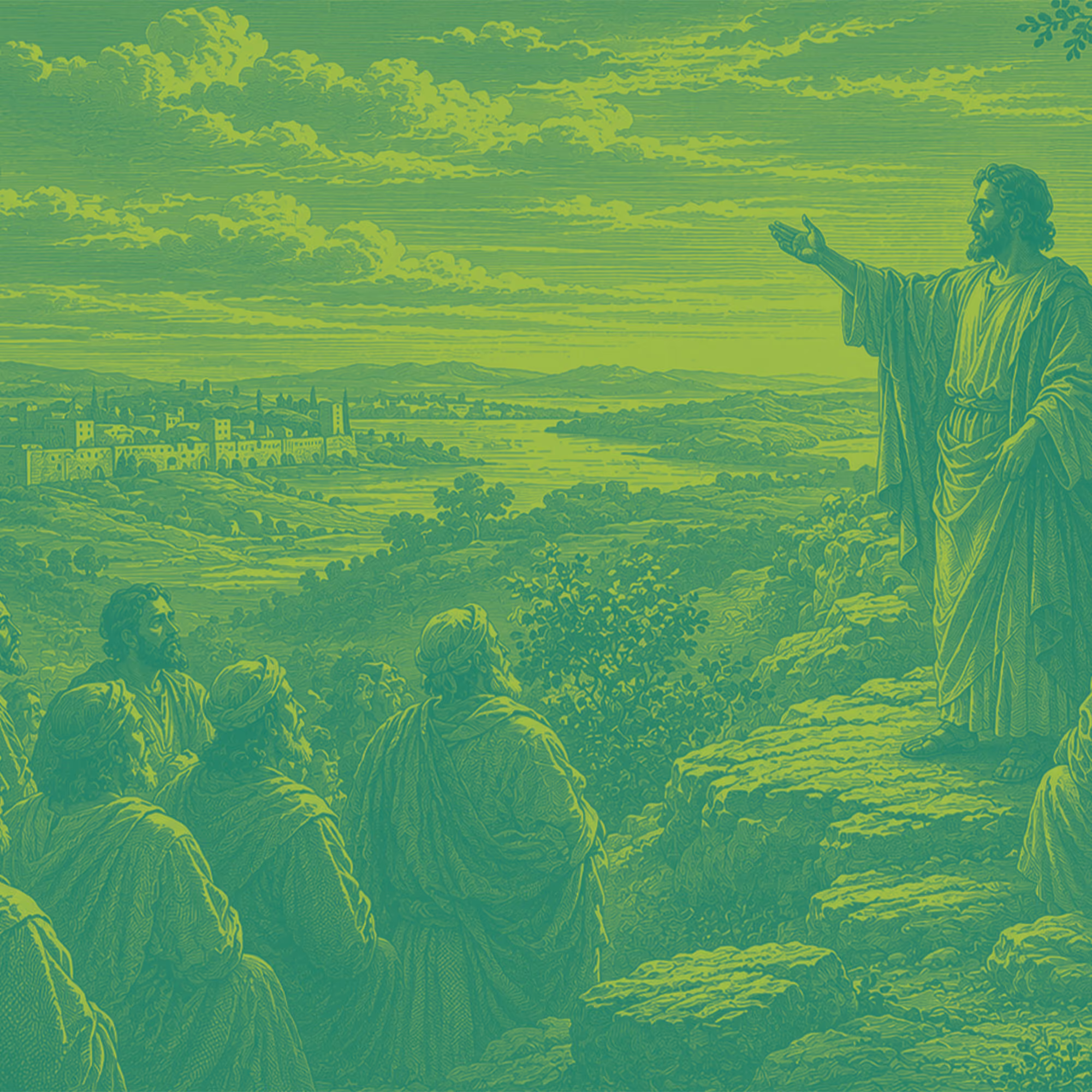
This is Acts 1:15–20:
15 In those days Peter stood up among the brothers (the company of persons was in all about 120) and said, 16 “Brothers, the Scripture had to be fulfilled, which the Holy Spirit spoke beforehand by the mouth of David concerning Judas, who became a guide to those who arrested Jesus. 17 For he was numbered among us and was allotted his share in this ministry.” 18 (Now this man acquired a field with the reward of his wickedness, and falling headlong he burst open in the middle and all his bowels gushed out. 19 And it became known to all the inhabitants of Jerusalem, so that the field was called in their own language Akeldama, that is, Field of Blood.) 20 “For it is written in the Book of Psalms,
“‘May his camp become desolate,
and let there be no one to dwell in it’;
and
“‘Let another take his office..’”
Well, we're about to look at one of the saddest, most horrible passages in all of the Bible. It is the telling of the horrible death of Judas in rather graphic detail. And there are three very important things to take away from this terribly sad passage. You know, when we encounter these kinds of passages, it's tempting just to want to get beyond them–they are just so awful.
First, this passage is recorded as a warning to us. You and I need to approach this passage with humble and open hearts, asking, “Why is this passage in the Bible? What does God mean for us to take away from it?” Peter rises here as a spokesman for the gathered followers of Jesus to talk about the death of Judas. But why do we need such graphic and gory details here? Well, as I said, this passage is a massive warning to us to take temptation and sin seriously. In this fallen world, you and I will face temptation every day. Think of who Judas was. He was chosen to be in the most important inner circle ever as a disciple of Jesus. He had heard the powerful wisdom of the Messiah again and again. He had witnessed the astounding messianic power of Jesus. You would think that that would free him from the kind of temptation that was his demise, but it didn't. This is why Peter (1 Peter 5:8) warns us that “the devil still prowls around like a roaring lion, seeking someone to devour.”
Sin and temptation must never be minimized. And if knowledge and experience could keep you safe, Judas would have never done what he did. It's only in admitting your vulnerability; it's only in crying out for empowering grace; it's only in resisting the enemy and the power that is yours in Jesus that you defeat temptation, sin, and Satan.
Second thing, it teaches us the divine inspiration of the Bible–it is there in this passage. There's a statement near the beginning of this passage that cannot be missed. Note these words that “the Scripture had to be fulfilled, which the Holy Spirit foretold by the mouth of David concerning Judas.” This is one of the strongest and most powerful statements about the divine inspiration of Scripture in the Bible. David wrote these words, but it was the Holy Spirit directly speaking through them. The biblical writers weren't independently creative, producing content. The words they wrote were under the direction of the Holy Spirit. So you can be sure that every word in every passage and every book of the Bible is there by divine origin, which means your Bible is trustworthy!
Third, this passage teaches us that what Judas did was part of God's plan because the arrest, crucifixion, resurrection, and ascension were part of God's plan. In the passion of Jesus, there were no unplanned or out of control moments. Everything that took place was according to God's plan. Now, does this mean that Judas wasn't responsible for his intentions and actions? No, Judas was fully responsible for what he did and why he did it, but it did not happen outside of God's sovereign will.
I have said this before, and it bears repeating, “In life, it is never ‘God's sovereignty’ or ‘man's responsibility’—it is always ‘both and!’” God works out his sovereign will through the choices of the people he created. So, we can never say, “God made me do it.” While at the same time, we can always rest in the fact that God's will—will be done—and that is good news indeed!
Questions for Personal Reflection or Group Discussion
1. If you were honest, what would you say are the parts of your life where you minimize sin and temptation? How has your perspective of temptation and sin impacted your choices in daily life? What would you say needs to change in your current approaches to temptation and sin?
2. What prevents you from admitting your need for God’s empowering grace? In what ways might God be calling you to be more vulnerable than what you are currently settling for?
3. What surprises you about the fact that Peter directly connects David’s writing to Judas? How does this provide evidence for the throughline of the Holy Spirit’s work throughout all of Scripture?
4. What stands out to you about the nature of God’s sovereignty and man’s responsibility as a “both/and” instead of an “either/or”? Why is it important to live each day knowing that God’s will will be done? What might be confusing to you about this truth? What can provide you with the peace to rest in God’s will?
Conversation Prompts to Use with Children
For Younger Children:
- Why isn’t being tempted the same as sinning? Even though sin isn’t the same as temptation, why do you think Christians should stay away from temptation? What starts to happen in our lives when we don’t take sin seriously?
- What do you think it means to be vulnerable? Why is being vulnerable a good thing? What does it mean to be needy? Why do you think God loves needy people so much?
- How do we know that we can trust that what the Bible says is true?
- Why should Christians trust that God is in control of everything all the time? Why should Christians also know and act like their choices matter?
For Older Children:
- Why isn’t temptation the same thing as sin? In what ways are you treating temptation and sin like it’s not a big deal? Why are temptation and sin something that we should avoid?
- Why is vulnerability such a good characteristic of someone who follows Jesus? Why is admitting that you’re needy to God a good thing, even though it can feel weak or bad?
- How do we know that we can trust that what the Bible says is true?
- Why should Christians trust that God is in control of everything all the time? Why should Christians also know and act like their choices matter?