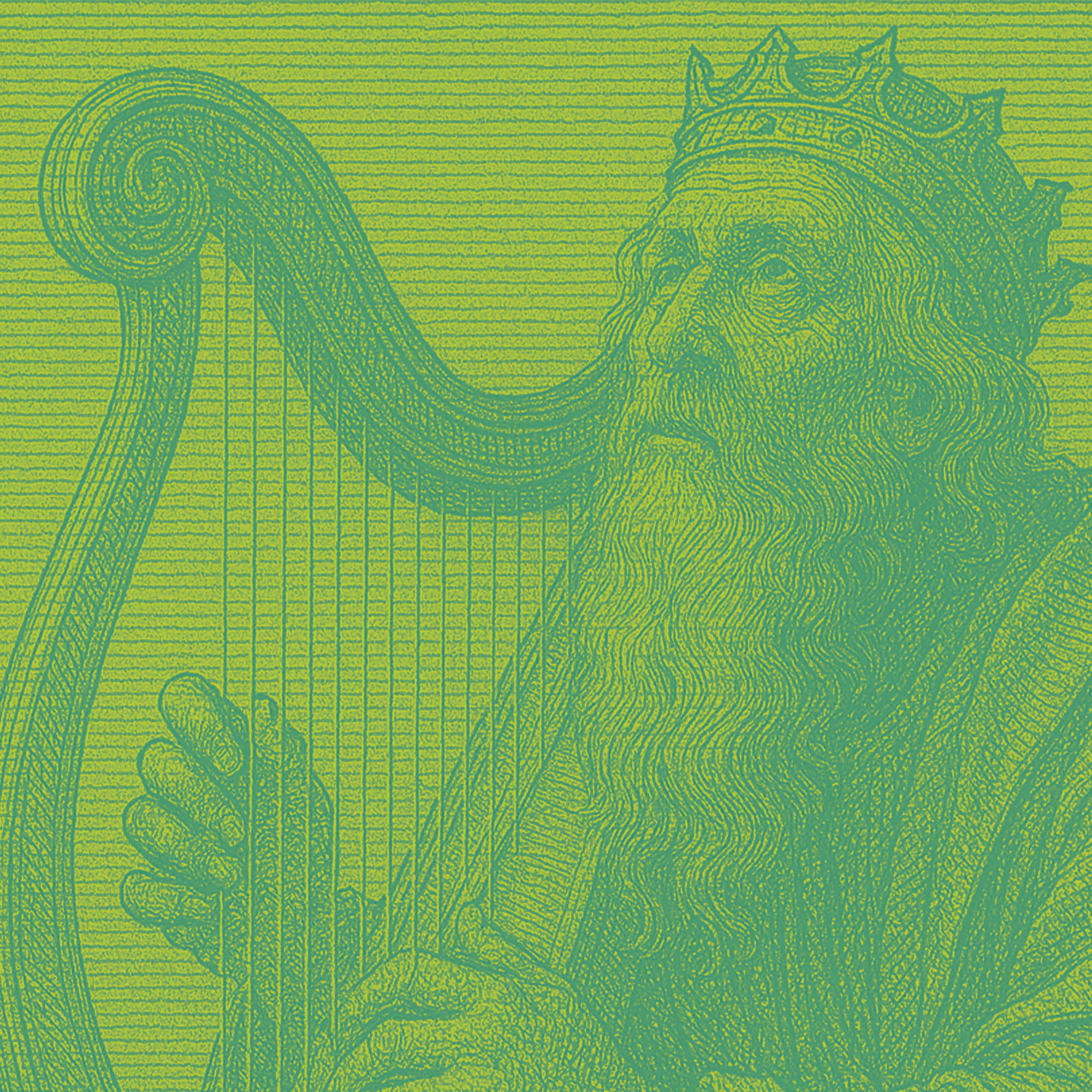
Psalm 27 was written in hard moments in David's life. Scholars say that either Psalm 27 was written when David was fleeing from the murderous jealousy of Saul; he had been nothing but a faithful servant to Saul, but Saul was jealous and out to take his life. It was a situation of horrible personal injustice. Or other people say that Psalm 27 was written when David was fleeing from his son, Absalom, who had conspired to take his throne. In a monarchy, the way you take the king's throne is by killing the king. And so, it's a horrible situation of family betrayal.
But in this Psalm of trouble, as the words begin of this Psalm, they don't begin with trouble; they actually begin with theology. And because of that, I want to title Psalm 27, "How to Do Theology." Listen to these words:
The Lord is my light and my salvation;
whom shall I fear?
The Lord is the stronghold of my life;
of whom shall I be afraid?
When evildoers assail me
to eat up my flesh,
my adversaries and foes,
it is they who stumble and fall.
Though an army encamp against me,
my heart shall not fear;
though war arise against me,
yet I will be confident.
One thing have I asked of the Lord,
that will I seek after:
that I may dwell in the house of the Lord
all the days of my life,
to gaze upon the beauty of the Lord
and to inquire in his temple.
In this hard moment of life, David doesn't begin by complaining; he begins by reminding himself of what is true. It's important to say that it's never more important to preach yourself the theology of the Word of God, than in those moments when life doesn't make sense. Let me say that again: it's never more important to preach to yourself the theology of the Word of God, than in those moments when life doesn't seem to make any sense.
But notice with me the kind of theology that David preaches to himself. This is the way theology should be handled; this is not some formal recitation of abstract truths; it's not a theoretical and impersonal outline; t's not esoteric, biblical logic for the elite.
The theology of David lives where David lives. Let me read this passage this way: "The Lord is light and salvation...The Lord is stronghold...of whom shall I be afraid?"
Now, I've just given you bad theology because I've left out a word. David says, "The Lord is my light...The Lord is my salvation...The Lord is my stronghold." Now, here's what theology should do for you: theology, properly handled, should not just define who God is (listen carefully), but should redefine who I am as a child of God. The statements David makes, "The Lord is my light and my salvation and my stronghold," are not just God defining statements-they are statements of David's identity as a child of God. That's why David says, "The one thing I want to do, is I want to go into the temple and gaze upon the beauty of the Lord." David understands there's One who sits on a throne of the universe who is way more beautiful than any ugly thing you will face in your life. And you will only properly understand the ugly things in your life when you look at them through the awesome glory of the beauty of your Redeemer.
Theology is meant to be personal; it's not ever meant to be just something you do with your brain, but something that redefines who you are as a child of God and therefore redefines the way that you live your life. David's not unafraid because he has power. He's unafraid because he knows his identity as a child of God. "The Lord is my light, my salvation, my stronghold." That's theology properly handled!
Questions for Personal Reflection or Group Discussion
1. Consider a time when life didn't make sense. Maybe it doesn't make sense today! Is, or was, When life doesn't make sense, is your first response to complain or to remind yourself of what is true?
2. Why is it so important to understand that theology isn't necessarily some formal recitation of abstract truth? Why is theology personal and not impersonal?
3. How is theology defining your understanding of God? How is theology redefining who you are as a child of God? How is theology changing you in your marriage? In your parenting? In your ministry? In your job? In your friendships? In your thought patterns? In your words? In your actions?
4. Why is your identity not primarily about you but about God? How does your view of God affect your view of yourself and your life's circumstances? Why is a proper view of God more important than all the problems in your life? How can the beauty of God change the way you think about and respond to your ugly circumstances?
Conversation Prompts to Use with Children
For Younger Children: How do you feel when you don't understand what's going on around you? How do you normally act when something happens and you're confused? Why do you think it's easy to get angry or sad or frustrated when you don't understand something? Why do you think it's easy to trust somebody you love (like your mom or dad or grandparent) even though you may be confused by them? Is God better than everyone? How do you think we can trust God even when things in our life don't make sense sometimes?
For Older Children: How can the things we learn about God shape our perspective of God? Our perspective of ourselves? Why do you think the study of God might be more than just a collection of Bible stories and data about Him we learn in Scripture? If your best friend kept telling you that he or she was worthless, wouldn't you remind him or her of the truth even though they kept living in confusion about their value? Why do you think it's important to remind ourselves of the truth when life doesn't seem to make sense? How can I help you study God properly so we can make sense of life's confusing moments?
You have permission to print, repost, share, distribute, and translate this resource as long as you credit Paul Tripp as the teacher, do not charge for this resource, and do not alter the content in any way. If you require an exception or special permission, please email Info@PaulTripp.com.