Well, the wonder of what John is recording for us here doesn't end. Let me read for you from John 19:38-42.
After these things Joseph of Arimathea, who was a disciple of Jesus, but secretly for fear of the Jews, asked Pilate that he might take away the body of Jesus, and Pilate gave him permission. So he came and took away his body. Nicodemus also, who earlier had come to Jesus by night, came bringing a mixture of myrrh and aloes, about seventy-five pounds in weight. So they took the body of Jesus and bound it in linen clothes with the spices, as is the burial custom of the Jews. Now in the place where he was crucified there was a garden, and in the garden a new tomb in which no one had yet been laid. So because of the Jewish day of Preparation, since the tomb was close at hand, they laid Jesus there.
Now there's a whole lot of information in this passage, and once again, you can read through this and say, "Well, what difference does all of this make? Why do I need all this detail?" But all of this is meant to encourage, reinforce, deepen our faith, and our celebration of the sacrifice of Jesus on our behalf. The specificity of detail is important, and it argues not only for the historicity of these events, that they really did happen because they fit with the location and customs of the moment, but that they remind us again of the plan of God being accomplished. There are two significant names here.
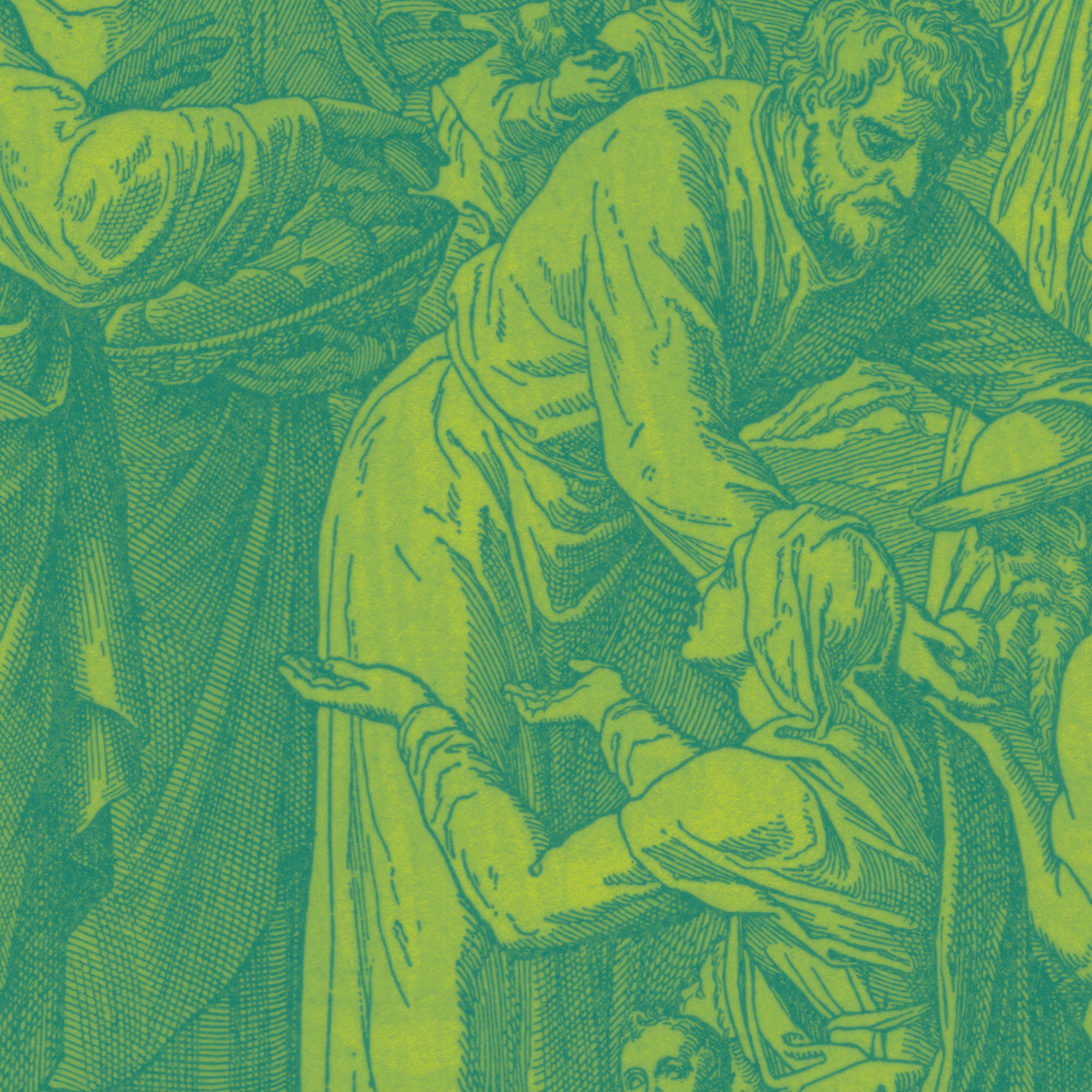
First is Joseph of Arimathea. He was a rich Jew who had become a disciple for Jesus, but he was sort of in the "secret order of the saints." He was afraid of the Jews because he knew that they hated Christ, and they were plotting his demise. But at this moment, Joseph comes public. He's obviously horribly distraught at what has been done to Jesus, and he goes to Pilate, which is an amazing amount of courage, and gets permission to take Jesus' body. Significance of that moment is that it's, again, a fulfillment of a prophecy that's there in Isaiah 53:9, "And they made his grave with the wicked and with a rich man in his death." There it is, Joseph of Arimathea, he's the rich man.
Then you have the second name, Nicodemus. When have you heard that name? Well, you go back to John 3. Nicodemus was the one who came to Jesus at night inquiring about salvation, and Jesus talks about being born again. Here is Nicodemus showing up again. It seems as though John's intention is to let us know that even though Jesus has now been killed for his life and ministry, there are people who really did believe in him as a result of his work. Following the Jewish burial customs is here, and Nicodemus brings the things that are necessary.
You see, death for Jesus is not a defeat. I was reading all of these details, and I thought of 1 Corinthians 15:54c-56.
Death is swallowed up in victory.
O death, where is your victory?
O death, where is your sting?
The sting of death is sin, and the power of sin is the law. But thanks be to God who gives us victory through our Lord Jesus Christ.
You see, all these details are here for us to let us know that God is in control even of the burial of Jesus. Because of the death and resurrection of Jesus, it predicts another resurrection that will come where we will be taken out of this sin-broken world to live forever with our Lord!
Questions for Personal Reflection or Group Discussion
1. How is all the detail of Christ's burial relevant to you today? Why is John taking the time to unpack so many details in the story of Jesus' burial preparation? How do the details of this passage encourage, reinforce, and deepen your faith?
2. Why is the sacrifice of Jesus on your behalf worthy of both grief and celebration? Take a moment right now and thank Christ for his sacrifice on your behalf. Keep in mind that he fulfilled all the prophecies about him, and that the fulfillment of those prophecies eternally benefits you personally.
3. How do the actions of Joseph of Arimathea anchor your faith today? Why is the fulfillment of prophecy such an important part of understanding who Jesus is and the gospel itself?
4. Take some time to refamiliarize yourself with 1 Corinthians 15:54c-56. How does the fact that Jesus conquered death apply to you today? How does his resurrection predict your resurrection? How does that give you help today and hope for the future?
Conversation Prompts to Use with Children
For Younger Children:
• Why are details important when telling a story about something true that happened? Why do you think the Bible gives us so many details about the death and burial of Jesus?
• Why are the details of Jesus' death and burial important for you and me today?
• Let's read 1 Corinthians 15:54c-56 together. Why don't we need to be afraid of death because of what Jesus did for us?
For Older Children:
• How do details within a story help to ground it as something true that happened in the past? What do you think John is doing here in this passage as he gives the reader so many details about the death and burial of Jesus?
• How are all of these details relevant to you and me today?
• Let's read 1 Corinthians 15:54c-56 together. Why don't we need to be afraid of death because of what Jesus did for us? How does this passage help you when it comes to fear and anxiety about so much in life?
You have permission to print, repost, share, distribute, and translate this resource as long as you credit Paul Tripp as the teacher, do not charge for this resource, and do not alter the content in any way. If you require an exception or special permission, please email Info@PaulTripp.com.