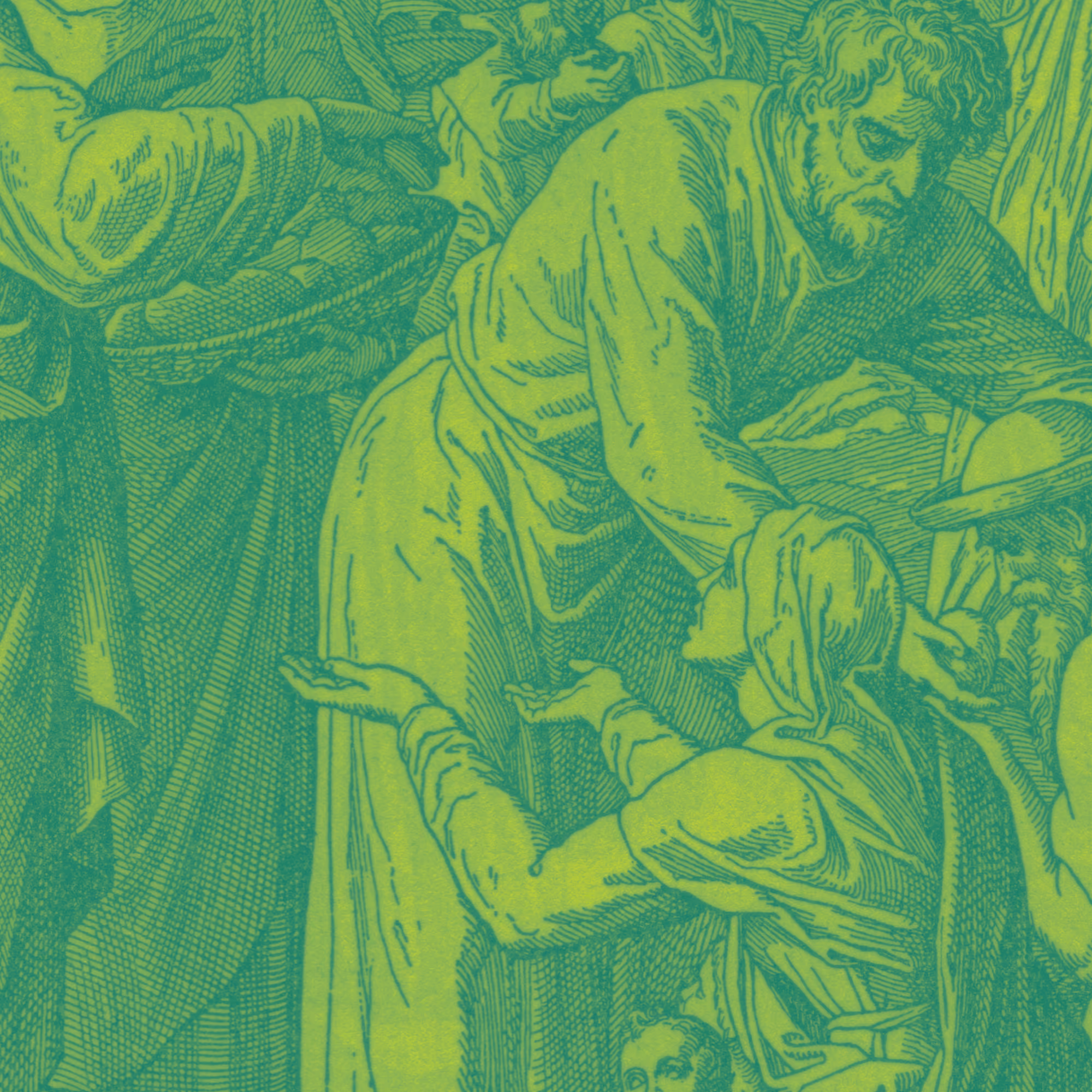
We find ourselves in the post-resurrection appearances of Jesus. I'm going to read an account of what has been a very famous story, but I think that we miss what this story is actually about. This is John 20:24-29.
Now Thomas, one of the twelve, called the Twin, was not with them when Jesus came. So the other disciples told him, "We have seen the Lord." But he said to them, "Unless I see in his hands the mark of the nails, and place my finger into the mark of the nails, and place my hand into his side, I will never believe."
Eight days later, his disciples were inside again, and Thomas was with them. Although the doors were locked, Jesus came and stood among them and said, "Peace be with you." Then he said to Thomas, "Put your finger here, and see my hands; and put out your hand, and place it in my side. Do not disbelieve, but believe." Thomas answered him, "My Lord and my God!" Jesus said to him, "Have you believed because you have seen me? Blessed are those who have not seen and yet have believed."
Often this story is presented as a story about Thomas, but that's not actually what it's about--it's actually about Jesus. Think about this, here's the question that should come out of what we just read: "If you had seen Jesus die, and you knew he had been buried in a tomb, and then someone told you they saw him alive, what would you have thought? What would you have said?" Thomas is being greeted with something that the natural mind just can't comprehend. We all know that there's nothing so final as death. That's why death is so hard to deal with, why we feel so helpless and experience such grief. So, it's understandable that Thomas wanted proof, "If he can show me his scarred body, I will believe."
I mean, seriously, how much do you begin to waver in your belief in God's promises when you fail to see them in your life? Or how much does your faith weaken and your prayers wane when answers don't seem to come? How much do you question God's presence and rule when you look around and it doesn't seem like he is in control? You see, we have a tremendous advantage because we're looking back on the resurrection narrative. But even then, we still struggle. So, we need to humbly ask ourselves, "Do we have similar struggles of faith like Thomas?"
Now, here's what this passage is about. It's about the gentle, patient grace of Jesus. He welcomes Thomas to examine his wounds. Instead of judging him, instead of him kicking him out of the discipleship, Jesus works with him to reaffirm and strengthen his faith. I mean, think about this, it's only after Thomas' confession of belief, not just in Jesus' resurrection but also in his deity, because we know that only God could conquer death; it's only then that Jesus confronts his demand for evidence. You see, Jesus wants Thomas to understand and wants us to understand that his promises are enough.
It really is true. He is who he says he is. It really is true that he will faithfully do what he said he will do. It really is true he will fulfill all his promises to us. You see, what faith does, it doesn't interpret God based on what experience tells us, but interprets experience based on who God says he is and what he will say he says he will do. Now, here's the ticket of this passage. This kind of faith is only ours by grace because it's not natural for us. And so, this story is actually about the patient grace of Jesus. Jesus meets Thomas where he is, invites Thomas to reaffirm his struggling faith, and he does the same for us!
Questions for Personal Reflection or Group Discussion
1. How much do you begin to waver in your belief in God's promises when you fail to see them in your life? How much does your faith weaken and your prayers wane when answers don't seem to come? How much do you question God's presence and rule when you look around and it doesn't seem like he's in control? Do you have similar struggles of faith like Thomas?
2. In what ways has Jesus worked with you to reaffirm and strengthen your faith? Why will Jesus' promises to you always be enough?
3. How have you seen God give you the grace to understand your circumstances and experiences based on who he says he is and what he says he will do? How have you seen God show up in your life in ways that were unexpected or even shocking? How often do you remind yourself of the previous ways God has moved and shown himself in your life?
4. Take some time right now to pause and reflect on the ways God has moved and worked in your life. Then thank him for the ways he's worked and helped and allow that intentional thought and thankfulness to determine how you see your future circumstances when they come.
Conversation Prompts to Use with Children
For Younger Children:
• What do you think the phrase, "seeing is believing" means? Why was that the case for one of Jesus' disciples, Thomas?
• How did Jesus respond to Thomas, even though he verbally doubted? How do you think Jesus responds to you when you question him?
• Why is Jesus really who he says he is? Why is that truth important for you and me right now?
For Older Children:
• What do you think "faith" really means? What are you trusting God for right now that requires faith in him? Why is that faith a good and important thing?
• Why do you think it's so easy for us to question God's love and control when we look around and it doesn't seem like God is in control or loving?
• Why is faith really a gift of God to us?
You have permission to print, repost, share, distribute, and translate this resource as long as you credit Paul Tripp as the teacher, do not charge for this resource, and do not alter the content in any way. If you require an exception or special permission, please email Info@PaulTripp.com.