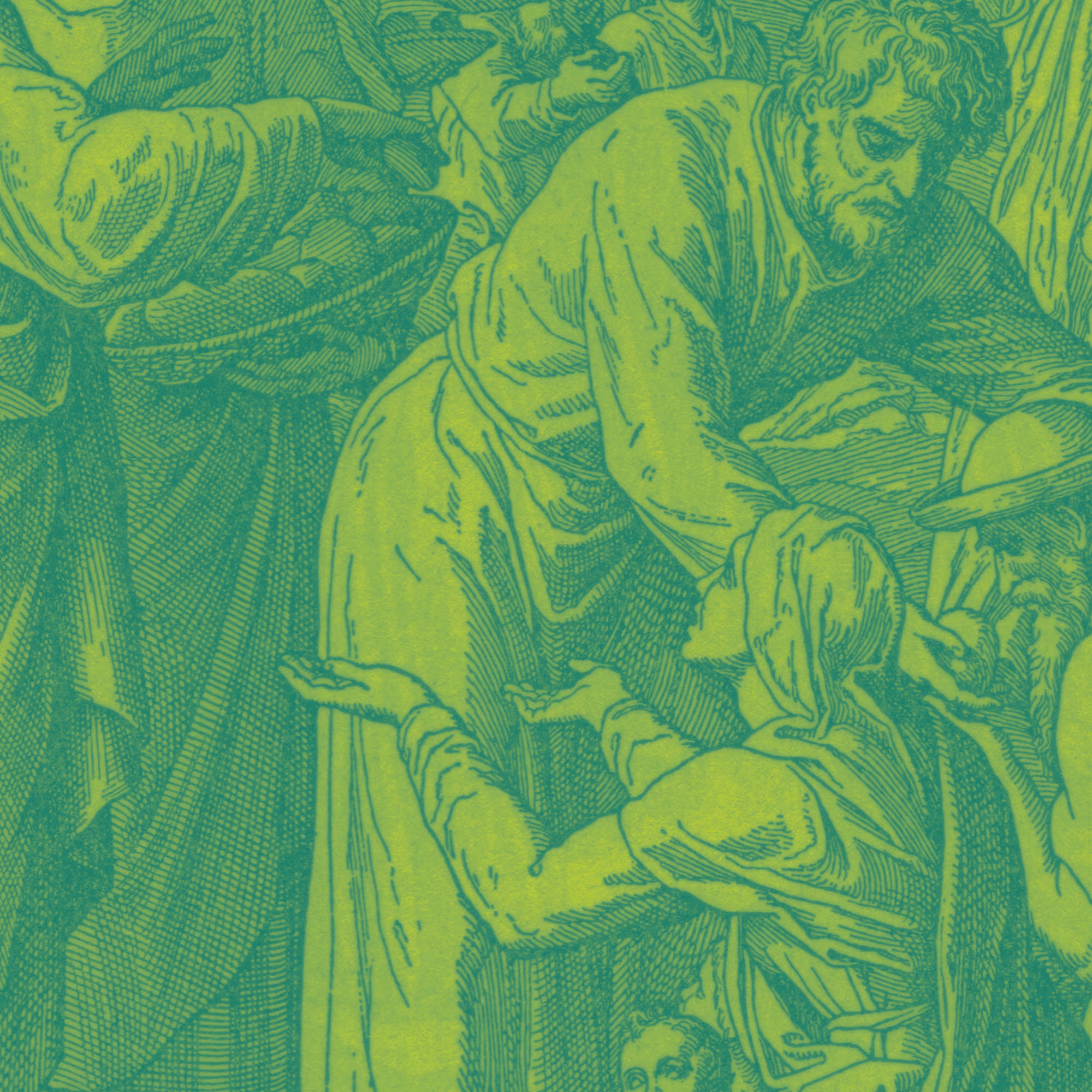
Well, I would entitle this passage we're going to look at, "Liquid Glory." It's the moment where Jesus reveals, at the beginning of his ministry, reveals in a fairly public situation, that he is Lord Creator. This is John 2:1-12.
On the third day, there was a wedding at Cana in Galilee, and the mother of Jesus was there. Jesus also was invited to the wedding with his disciples. When the wine ran out, the mother of Jesus said to him, "They have no wine." And Jesus said to her, "Woman, what does that have to do with me? My hour has not yet come." His mother said to the servants, "Do whatever he tells you."
And you know that Jesus fills six large stone vessels, that are filled with water, he turns that water into gallons and gallons of wine, wine finer than had been there in the beginning. Now, this is a bit of a sleeper miracle. It just doesn't seem so amazing at first glance. So, he turned water into wine, yada, yada. But what takes place here is, in fact, very significant. It's so significant that the capstone of the passage is that as a result of this miracle, Jesus' disciples believed in him. It deepened and strengthened their faith. Again, on the surface, it doesn't seem like much of a miracle; not in comparison to some of the grander, more public miracles that Jesus did.
But think about this, until this point, Jesus has lived a pretty quiet life, hiding his true identity, that is until the announcement by John the Baptist. But still, most of Palestine does not know who he is. His response to his mother is not meant to be rude, but it makes it clear that he's not ready to fully identify himself. Now, I love this. Mary doesn't know what Jesus is going to do, but she knows that she gave birth to the Son of God, and he has the power to do whatever he wants to do. So, she says to the servants, "Do whatever he tells you, because it's going to be good."
You know the story. Jesus turned six large vessels of water into wine better than the wedding had served in the first place. Now, why did John summarize the miracle the way he did? Jesus revealed his glory, and it sealed the faith of the disciples.
Now, here's what you need to know-this is what this passage is about. By turning water into wine, Jesus is demonstrating that he is the creator of all things-the creator the gospel declared him to be. As creator, he is sovereign over every aspect of the created world. He can command any part of creation to do his bidding.
It makes me think of Jonah 4, when God commands a worm, and the worm obeys him and eats a plant. Only the Lord God Creator could command the molecules of water to transform into molecules of very fine wine. Let me say that again, only the Lord Creator could command molecules of water to transform into molecules of very fine wine. You don't have that ability-don't try this at home. He's the glorious one, who with words, spoke the physical universe into being. He has the right, authority, and power to command creation to do whatever he wants to do. Jesus of Nazareth is Lord Creator.
When I read this passage, I think of Peter and his first letter to people who are struggling with suffering, encouraging believers to entrust themselves to their faithful creator. As creator of everything that exists, there's nothing he can't do for you. Rest in the glorious glory of who he is!
Questions for Personal Reflection or Group Discussion
1. How does turning water into wine point to the fact that Jesus is the Creator of the universe? How does it display the authority of Jesus over all things? Why does what Mary says to the servants show us that Jesus is good and worthy of our trust?
2. How does the miracle of turning six large vessels of water into the best wine relate to you personally? Why is this miracle relevant to you today? How can this miracle help you to better understand and accept the deity of Jesus Christ?
3. If turning water into wine sealed the faith of the disciples, what does that tell you about the nature of this miracle that we have a tendency to blow right past when we read it? How does it show us the glory of Christ?
4. In what practical ways can you entrust yourself to your faithful Creator? If there's nothing he can't do for you, how can that lead you to rest in him?
Conversation Prompts to Use with Children
For Younger Children:
• How can we know and understand that Jesus wasn't just a person, but God himself in the flesh? How do you think a miracle can help people understand that Jesus is more than man?
• What is it about miracles that make us pay attention in ways that we ordinarily wouldn't pay attention?
For Older Children:
• How can we know and understand that Jesus wasn't just a person, but God himself in the flesh? How do you think that something like a miracle can help people understand that Jesus is more than man?
• What is it about miracles that make us pay attention in ways that we ordinarily wouldn't pay attention?
• How can a biblical miracle that you read about lead you to trust in Jesus right now?
You have permission to print, repost, share, distribute, and translate this resource as long as you credit Paul Tripp as the teacher, do not charge for this resource, and do not alter the content in any way. If you require an exception or special permission, please email Info@PaulTripp.com.