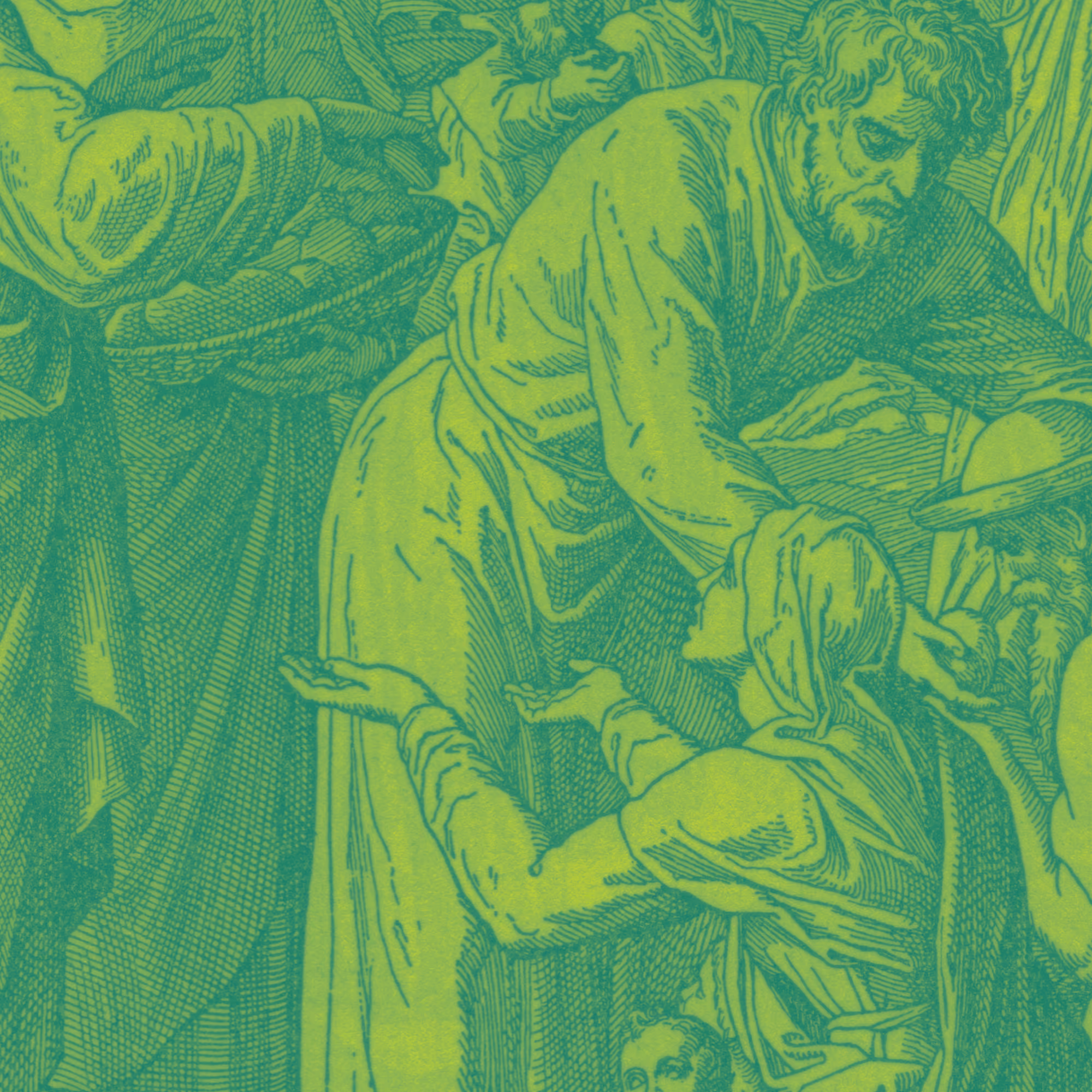
Well, we are now in the part of the Gospel of John where John is telling the story of the final moments of Jesus' life on earth. Jesus has been nailed to a cross, a horrible form of execution, that cross jammed into the ground, and we find him in this moment speaking his first words. This is John 19:25-27.
Standing by the cross of Jesus were his mother and his mother's sister, Mary the wife of Clopas, and Mary Magdalene. When Jesus saw his mother and the disciples whom he loved standing nearby, he said to his mother, "Woman, behold, your son!" Then he said to the disciple, "Behold, your mother!" And from that hour the disciple took her to his own home.
This moment may look like a moment of defeat, but it isn't. Peter's sermon in Acts, chapter 2, tells us that the worst thing that ever happened is the best thing that ever happened! That, yes, Jesus was delivered to this horrible death by unjust and evil men, but according to the foreordained plan of God. And by God's plan, we are invited to be witnesses to Jesus on the cross. There we see what he would be willing to do for our justification and reconciliation to God.
And as Jesus hangs here, now in horrific pain, pain that's hard to imagine, and public shame, he's not filled with a sense of himself, he's not complaining about what is going on. In fact, the first words of Jesus on the cross were not about himself, they were for someone else. As he's on the cross, he sees his mother and John, who is writing this history for us, and his response is shockingly selfless and tender. This is the beauty of the heart of Jesus; he's flooded with concerns, not for himself, but for his mom. Here is Jesus, a real man, this is his real mother, he's her Son. This is the woman that was chosen by God, to bring the Messiah to earth, her unique position in God's plan, to bring saving grace to the world through Jesus. Elizabeth, John the Baptist's mother, said of Mary that she was "blessed among women" because God had chosen her for this. Imagine being called by God to give birth to the Lamb of God, the Savior, Emmanuel, Jesus.
So, the heart of Jesus, at this moment, isn't angry; it's not full of self, but it's filled with tender, caring love. I believe that this is recorded for us, this moment that probably people even standing around didn't notice, is recorded for us so we could see the heart of our Savior, see his tender, caring love. And I think John wants us to know that this heart of love is not just for Mary, but for you and me as well. This is why Jesus welcomes us to bring our burdens to him (1 Peter 5:7). Your fears, your weaknesses, your cares, your burdens, your struggles, your sin is never burdensome to him because he loves you. And he says, "Come, you bring your burden to me," just like he saw his mom now left alone, without his care, and he was burdened for her.
Jesus is burdened for you today. He cares for you today. Be comforted in your trials. Be comforted in your doubts. Be comforted in your fears. Be comforted when you don't know what to do. Maybe you don't even know how to pray. Jesus cares for you. He suffered for you so that you would be welcomed to bring your burdens to him!
Questions for Personal Reflection or Group Discussion
1. What is your first thought or reaction to Jesus' invitation to bring your burdens to him? Why might it be scary to do something like that? How might bringing your burdens to Christ be an essential and key part of a thriving relationship with him?
2. What fears, weaknesses, cares, burdens, struggles, and sin do you need to bring to the lover of your soul? How could laying your burdens on Jesus be something that helps you deal with them in a healthy way?
3. As we see that Jesus' heart isn't angry or full of himself, but filled with tender, caring love for his mother and John in this passage, how could that affect your perspective and relationship with him in new ways?
4.Knowing that Jesus is burdened for you today, how does that impact your desire to connect with him through prayer and Scripture reading? Why do you think this passage of Scripture isn't just a description of history, but a clear way of understanding God's love for you specifically?
Conversation Prompts to Use with Children
For Younger Children:
• When something goes wrong in your life, who is the person with whom you normally want to talk about it?
• Do you think God cares about your problems? Why or why not? How can we know that God actually cares about us, our problems, and the details of our lives?
For Older Children:
• Why do you think it's important to understand and live as if we truly believe that God cares about us, the problems we go through, and the details of our lives? In what ways have you had trouble believing that God cares about you?
• After reading this passage in John 19:25-27, how are you able to examine and see Jesus' heart for his family and friends? How might his care for them be something that helps you understand his care for you specifically?
•When was the last time you brought your fears, weaknesses, cares, burdens, struggles, and sin to Christ? What prevents you from bringing all that to him on a regular basis? How can we help each other bring our lives to Jesus more regularly?
You have permission to print, repost, share, distribute, and translate this resource as long as you credit Paul Tripp as the teacher, do not charge for this resource, and do not alter the content in any way. If you require an exception or special permission, please email Info@PaulTripp.com.