Well, we're considering now John 5, verses 1 through 18. This is a familiar story, but I want to say something to you; the problem of this story is the focus of the reader, because the story is so outrageously crazy that it may grab your focus, and you miss what John is actually setting up about Jesus. So, keep that in mind as I read.
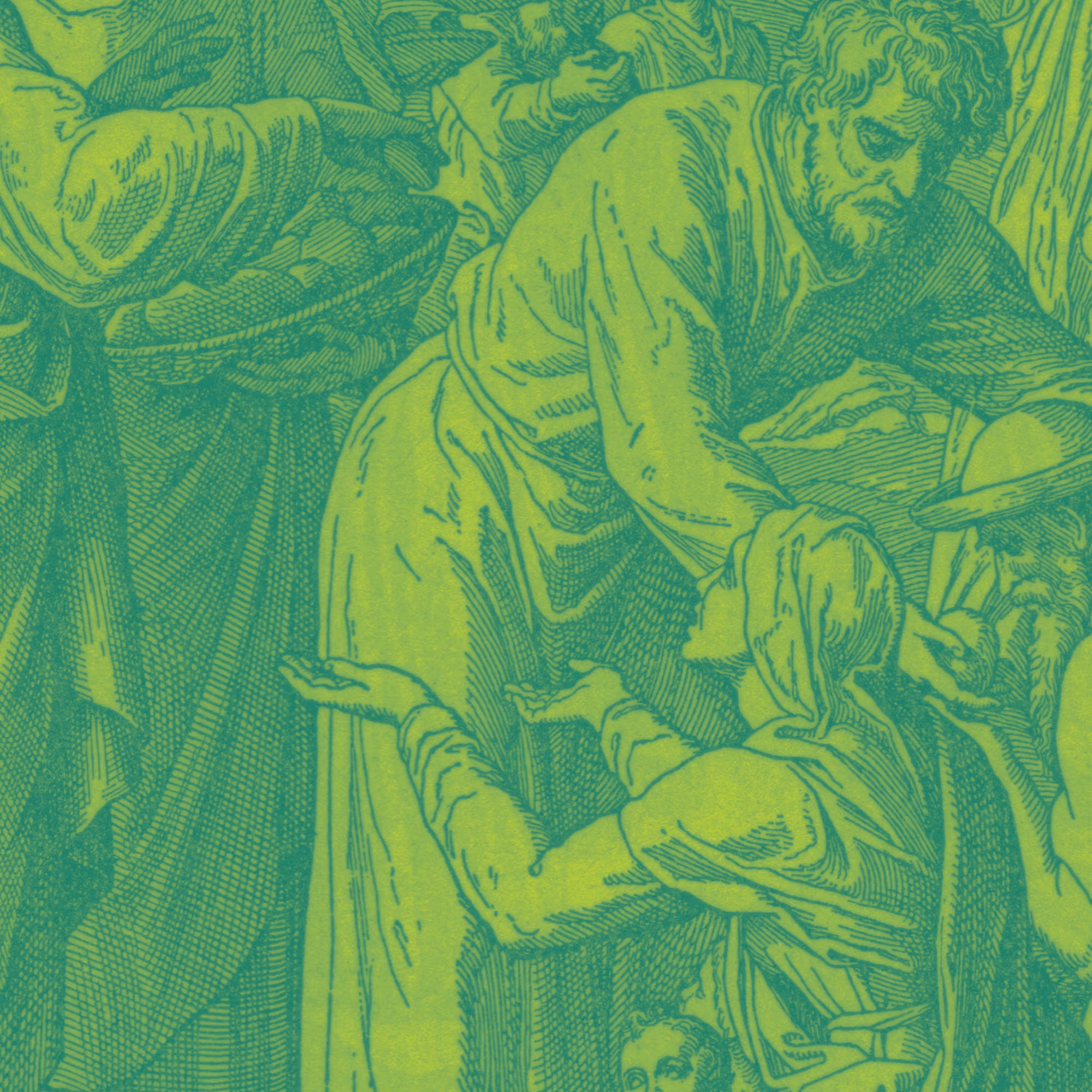
Now, there is in Jerusalem by the Sheep Gate a pool, in Aramaic called Bethesda, which has five roofed colonnades. In these lay a multitude of invalids-blind, lame, and paralyzed. One man was there who had been an invalid for thirty-eight years. When Jesus saw him lying there and knew that he had already been there a long time, he said to him, "Do you want to be healed?" The sick man answered him, "Sir, I have no one to put me in the pool when the water is stirred up, and while I am going another steps down before me."
(I'm going to jump down to the bottom of the Passage.)
The man went away and told the Jews that it was Jesus who had healed him. And this was why the Jews were persecuting Jesus, because he was doing these things on the Sabbath. But Jesus answered them, "My Father is working until now, and I am working."
Now, I left out what seems to be the most outrageous thing of this passage.
The sick man answered him, "Sir, I have had no one to put me into the pool when the water is stirred up [So I can be healed]..." Jesus said to him, "Get up, take up your bed, and walk."
What? Before that, Jesus had said to him, "Do you want to be healed?" It sounds like the dumbest rhetorical question ever. But it's not dumb. Jesus is trying to draw faith out of this man because he's going to need to have faith because Jesus is going to ask him to do the unthinkable--"Get up, take up your bed, and walk." And at once, the man is healed.
Now, this miracle of this invalid who had been an invalid for thirty-eight years, and what seems to be the crazy question of Christ, and then telling him to stand up, is so amazing that you may lose sight of what John is setting up. What happens is that the Jews around Jesus are not excited about this miracle and ready to say, "This has got to be the true Messiah." Do you know what they're mad at? They're mad at the fact that it was done on the Sabbath! These guys are so bound up in their legalism that they can't see the glory of what is in front of them in the work of Jesus. It's just amazing, and it's a great warning to us. Jesus wasn't breaking the Sabbath Law. It was just the Rabbinic Code, that they had added all these legalisms to the way that the Sabbath should be observed. And they cared more about their little legalistic regulations than they did about the fact that this man, who had been an invalid for thir
"My father is working until now, and I am working." What is he saying? "The grand heavenly Father doesn't suspend his care for his children because it happens to be the Sabbath; and I'm going to care for his children on the Sabbath as well." In that way, Jesus is claiming the same authority over the Sabbath as the Father. He's saying, in a few words, "I am Lord of the Sabbath." And so, here's what this miracle is about. It's about the drama of human need that can't be met by formal legalistic religion; that requires the intervention of the Lord of the Sabbath. That's the story. That's who we need because sin leaves us crippled as well.
Questions for Personal Reflection or Group Discussion
1. In what ways do you see that sin has left you crippled? How have you seen sin cripple others in your life? If Jesus was able to heal the physically crippled in this story, what is preventing you from believing that he can heal your spiritually crippled life? In what ways is Jesus calling you right now to "get up, take up your bed, and walk?"
2. How is it tempting for you to be more dedicated to the legalistic observances of being a Christian than actually following Christ? In what ways has legalism dominated your walk with God since you've become a believer? Why is legalism so dangerous to the follower of Christ? How is your legalism preventing you from "getting up, taking up your bed, and walking?"
3. How is Jesus currently working in your life? Have you taken the time to stop and observe the ways he is working? Take a moment right now and write down a few things that come to mind after you ask God in prayer to show you some ways that he's working in your life.
4. How are you personally and specifically in need of the Lord of the Sabbath to transform your life?
Conversation Prompts to Use with Children
For Younger Children:
• What do you think it means to have faith? Why do you think God wants us to be people of faith who trust in him even when we don't understand how he's working in our lives?
• Why can we always trust in the ways Jesus is working in our lives?
For Older Children:
• What is legalism? Why is legalism so dangerous? How has legalism been a part of your spiritual life? How have you seen legalism play itself out in my life?
• If we're doing things legalistically but our heart isn't in what we're doing, how is this dangerous? What do you think God values more: doing things for him or a heart for him? Why?
You have permission to print, repost, share, distribute, and translate this resource as long as you credit Paul Tripp as the teacher, do not charge for this resource, and do not alter the content in any way. If you require an exception or special permission, please email Info@PaulTripp.com.