Well, we're in John 13, and I want to look with you at what is the sweetest and saddest portion of the Gospel of John, John 13. In fact, when I was studying this, it brought a tear to my eye. It's the moment where Jesus is with his disciples in the Upper Room, his final personal moment with them before he begins to march to his death.
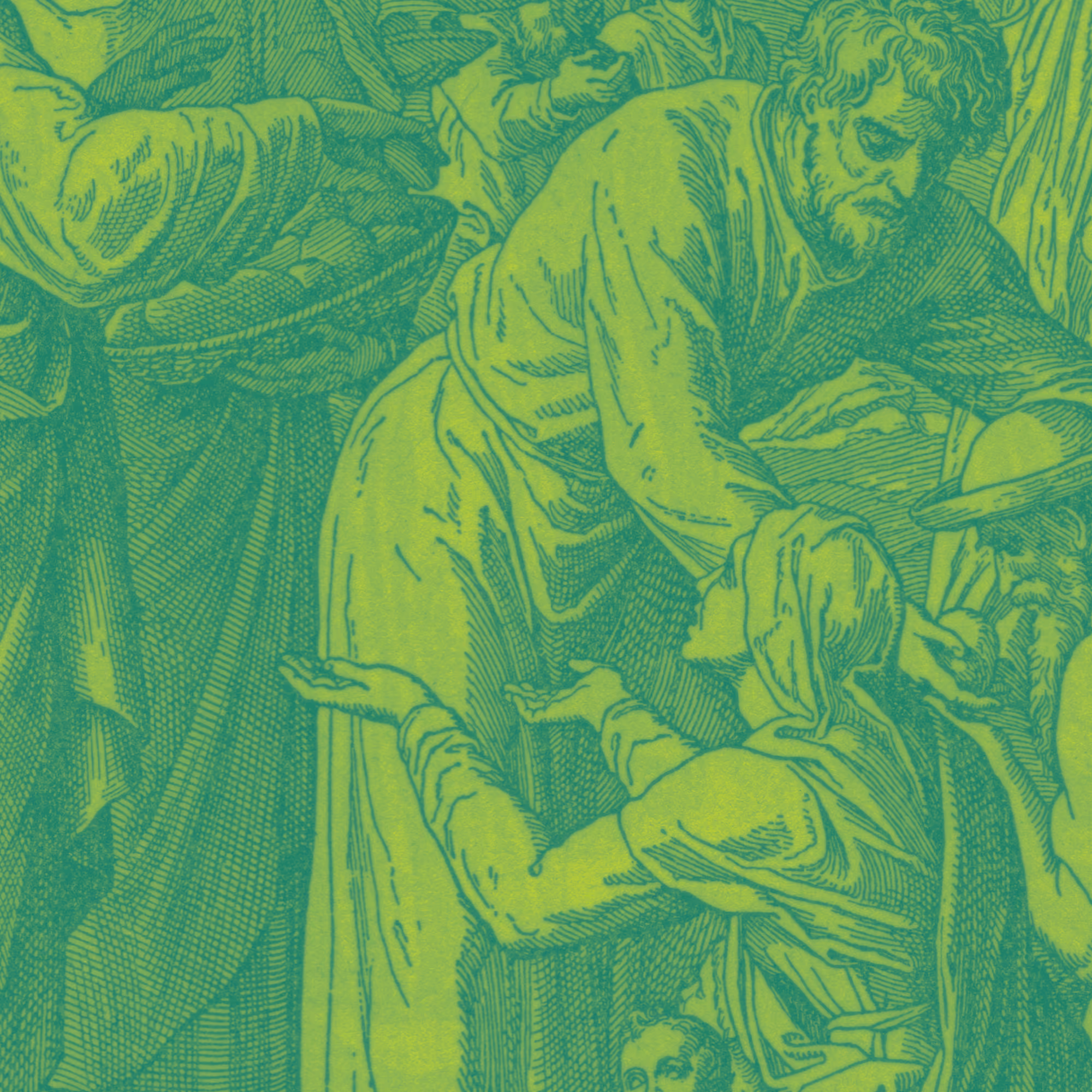
And in the middle of the meal, Jesus gets up, takes a basin of water and a towel, and begins washing the disciples' feet. Now, the custom was, there would be a servant in the room who, as the guests entered the room, would wash their feet before they reclined for a meal. Now, that was a dirty job because you're walking on sandy roads with sandals. And it was always assigned to the lowliest servant in the house. There were different levels of servants; the lowliest of low would do the feet washing.
So, I want to get you to think about what is being depicted here. First, you don't need any more proof of the extent of Jesus' love than this. This is the Messiah, the King of kings. None of the disciples were getting down there to wash one another's feet; they were more interested in who could sit closest to Jesus. It's a powerful example of his love. It's a shocking picture of his humility. It pictures his servanthood. I've said, "He's willing to take on this task that was usually assigned to a lowly servant." This washing is meant to picture the washing away of our sins through his life, death, and resurrection.
It's a striking picture of his love for his enemies--yes, he even washed Judas' feet; the one who would betray him. And in doing all these things, Jesus is welcoming his disciples into his messianic redemptive community. These disciples are dear to him, and he's anointing them as the ones who will take up his mission after his crucifixion, resurrection, and ascension.
Peter jumps in, as Peter would, and says, "Well, if you're going to wash my feet, wash my whole body." And Jesus uses this conversation to teach us something. After we've been washed by his saving grace, we don't need full washing again. We just need the regular cleansing of his grace. What is that cleansing? Well, it's conviction, confession, forgiveness, repentance, and empowering grace to live in a new way. That washing of conviction, confession, forgiveness, repentance, and empowering grace we need again and again and again.
Now, so far, this passage has been beautiful. Again, intimate, tender, seeing the love, humility, and servant-spirit of Jesus. But then the passage has a haunting ending. Jesus turns and predicts his betrayal by Judas and his denial by Peter. These men had lived in intimate settings with Jesus. They had left everything to follow him. They had heard his teaching. They had heard validating voices from heaven. They had seen glorious miracles, but they turned their backs on him. This horrible turn in the story has been recorded and preserved by God, who loves us, as a warning to us. Would we have theological knowledge and biblical understanding and participate in the life and ministry of church, yet turn our backs on our Redeemer? May that never be. May God give us grace!
Questions for Personal Reflection or Group Discussion
1. How do the actions of Jesus in this passage lead you to worship him in more sincere ways? What does Jesus' posture of humility do to change your heart toward others? Why is humility such an attractive and admirable characteristic in a person?
2. If Jesus is willing to take on this task that was usually assigned to a lowly servant, what position of humility might God be calling you to take in specific areas of your life? If this washing is meant to picture the washing away of our sins through his life, death, and resurrection, how does it help you to appreciate and apply the gospel to your own heart right now?
3. Why is enemy-love a defining characteristic of a person who's a Christian? How is this specifically difficult for you? What enemies in your life would you say are impossible to love? How might God be calling you to change your heart attitude toward your enemies? How could loving your enemies change you more into the image of Christ?
4. Is it possible (right here, right now) that you have theological knowledge, biblical understanding, and church participation, yet simultaneously have a heart that has turned its back on the Redeemer? If so, take a moment to pray and ask God for forgiveness. Ask him to change you from the inside out and mold you into someone who treasures him above all else.
Conversation Prompts to Use with Children
For Younger Children:
• What do you think humility means? Why is Jesus described as humble in the Bible? If Jesus is the King of kings and at the same time a humble servant, what do you think that means for you and me as his followers?
• Why do you think it might be possible for people to know a lot about God yet not really know him?
For Older Children:
• Why is humility such an attractive characteristic in another person? Who in your life would you say is someone who embodies humility?
• Why is the fact that Jesus is humble something that should blow our minds?
• Why is enemy-love a defining characteristic of a person who's a Christian? How is this specifically difficult for you? What enemies in your life would you say are impossible to love? How might God be calling you to change your heart attitude toward your enemies? How could loving your enemies change you more into the image of Christ?
• Why do you think it might be possible for people to know a lot about God yet not really know him?
You have permission to print, repost, share, distribute, and translate this resource as long as you credit Paul Tripp as the teacher, do not charge for this resource, and do not alter the content in any way. If you require an exception or special permission, please email Info@PaulTripp.com.