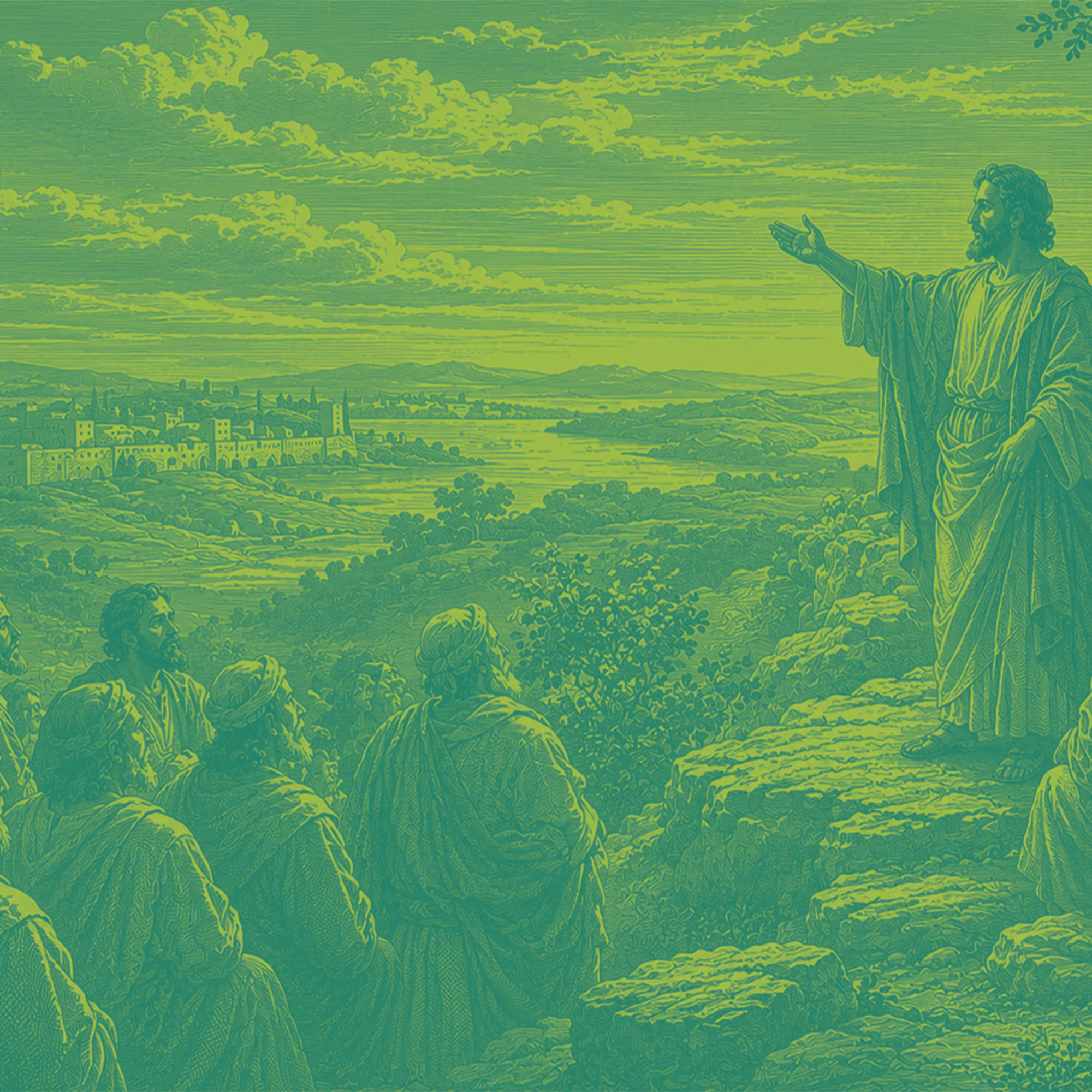
This is Acts 2:14-24:
14 But Peter, standing with the eleven, lifted up his voice and addressed them: “Men of Judea and all who dwell in Jerusalem, let this be known to you, and give ear to my words. 15 For these people are not drunk, as you suppose, since it is only the third hour of the day. 16 But this is what was uttered through the prophet Joel:
17 “‘And in the last days it shall be, God declares,
that I will pour out my Spirit on all flesh,
and your sons and your daughters shall prophesy,
and your young men shall see visions,
and your old men shall dream dreams;
18 even on my male servants and female servants
in those days I will pour out my Spirit, and they shall prophesy.
19 And I will show wonders in the heavens above
and signs on the earth below,
blood, and fire, and vapor of smoke;
20 the sun shall be turned to darkness
and the moon to blood,
before the day of the Lord comes, the great and magnificent day.
21 And it shall come to pass that everyone who calls upon the name of the Lord shall be saved.’
22 “Men of Israel, hear these words: Jesus of Nazareth, a man attested to you by God with mighty works and wonders and signs that God did through him in your midst, as you yourselves know— 23 this Jesus, delivered up according to the definite plan and foreknowledge of God, you crucified and killed by the hands of lawless men. 24 God raised him up, loosing the pangs of death, because it was not possible for him to be held by it.
Well, Acts invites us into a second amazing moment that we get to witness as if we were in the crowd. It's the very first sermon preached by a disciple of Jesus, the very first sermon preached after the gift of the Spirit was given. And I have got to say, I love, love, love this sermon by Peter. We're going to spend the next three episodes of these Bible studies unpacking it.
You know, Peter begins the sermon by addressing the accusation that the followers of Jesus are drunk. And he says first that it's too early in the day for them to be drunk. But then he roots his explanation of what's going on in a prophecy made by Joel, literally thousands of years before the moment in which Peter is speaking. Joel is talking about “the last days,” and if you look at how that phrase is used in Scripture, “the last days” are really this period of time from the moment of the Pentecost, the gift of the Spirit, to the moment of the return of Christ. That means everybody who lives between when the Spirit was given and the return of Jesus, is living in “the last days” and in “the last days,” God promises that he will pour out his Spirit.
The big event of “the last days,” is the gift of the Spirit for building of this global church and the building of the global church of people of every tongue and every language, every period of history, is necessary before Jesus returns. When Joel talks about the darkened sun and the bloody moon, these are things yet to come because Jesus is yet to return. See, Joel's prophecy is a summary of what will happen between ‘the already’ of the Pentecost and ‘the not yet’ of the return of Jesus.
But here's what you need to pay attention to. Peter ends the introduction to his great sermon with something very important: it's what theologians call “the free offer of the gospel”: “and it shall be that everyone (whoever) who calls on the name of the Lord will be saved.” There's no ethnic or national restriction, no restriction of age, no restriction of location or history, no restriction of gender, no restriction of economic or social class. God, in the magnitude of his love and grace, will receive anyone, yes, I said it, anyone who at any time calls upon his name.
Now, if you had been in that crowd, you would have heard what Peter said as being something incredibly radical because he is declaring that God's love is not just going to be showered upon the Jews, but upon everyone who comes to him in confession and faith. It's a beautiful thing to think, no matter who you are, no matter where you are, no matter how bad you've messed up, no matter how dark your life has been, no matter how ignorant you have been to the truth, no matter how many idols you have chased in your life, if you come to God, he will not turn you away. He will meet you with his love and forgiveness. It is the ultimate hopeful declaration!
And we will see very soon that this declaration not only draws thousands to come to God in repentance and faith, but it will bring trouble down on the head of the disciples. God's offer of acceptance, reconciliation, forgiveness, is free: whoever comes to him, he will not turn away!
Questions for Personal Reflection or Group Discussion
1. In these “last days” between the “already” of Pentecost and the “not yet” of Jesus’ return, in what ways have you witnessed God building his global church both locally and globally? How has God specifically called you to be a part of what he’s currently doing in the world? What do you think he might be calling you to do in the near future?
2. How was the free offer of the gospel presented to you? How might God be calling you to present the free offer of the gospel to others in your natural circle of influence?
3. What does it mean to you personally, knowing that God will not turn anyone away who calls upon his name? Give an example or two of how you have experienced God’s love and forgiveness in your life.
Conversation Prompts to Use with Children
For Younger Children:
- What do you think it means that “God loves everyone who calls on his name”? Does God even love “bad” people? Why or why not?
- Why are we always able to put our trust and hope in God, no matter what?
- What do you think it means that the gospel is a “free offer” to anyone? Have you ever received the free offer of the gospel? If you haven’t, what might be stopping you from saying “yes” to the free offer of the gospel?
For Older Children:
- What do you think it means that “whoever calls on the name of the Lord will be saved”? Why do you think the gospel is for everyone and not just the religiously committed people?
- If you put your trust in God, why can you be confident that he will never let you down? In what ways has God proven to us that he will never abandon, forget, or turn his back on us?
- Do you think it’s fair that God will accept anyone who calls upon his name? What about people who have done horrible things their whole life?
- Have you ever received the free offer of the gospel? If you haven’t, what might be stopping you from saying “yes” to the free offer of the gospel?