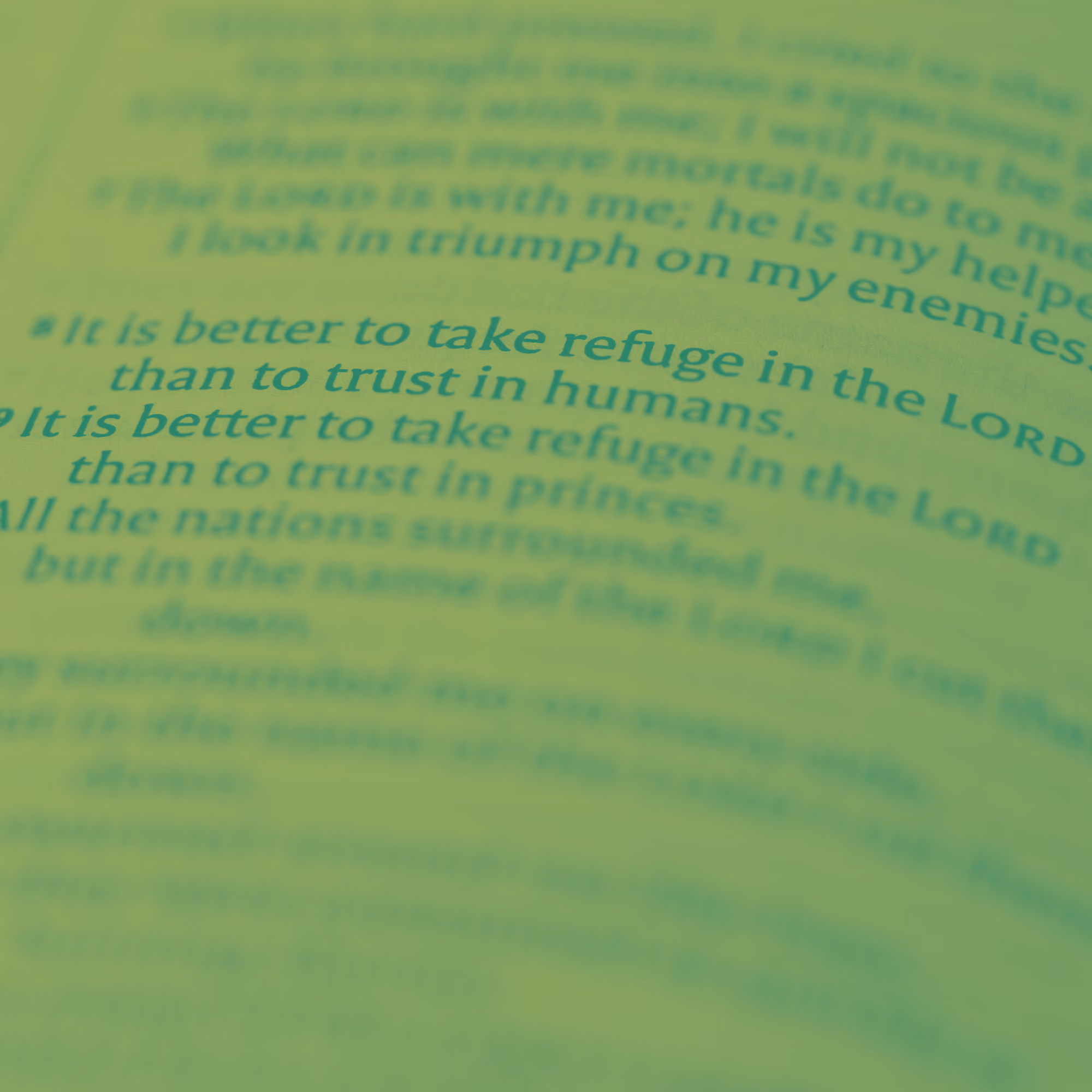
I have said many times that I believe that the first four words of the Bible, "In the beginning, God," are the four most important words in the Bible. Since the Bible is the Word of God, written by the almighty Creator and reigning King of the universe, then perhaps these are the four most important words ever written and, therefore, worthy of our careful examination and application.
This may sound unnecessarily obvious because if you are a Christian, of course you believe that God exists! But it's worth stating the obvious again: the most important thing for your mind to contemplate and your heart to meditate on is the existence of God.
The way you approach your spouse, children, parents, neighbors, boss, co-workers, employees, career, education, daily household tasks, finances, body, fitness, nutrition, sexuality, the joys and disappointments of life, your identity, meaning and purpose will all somehow be shaped by your view of the existence of God.
Or perhaps more accurately, how you live your everyday life in light of the existence of God.
If I could sit with you and watch the video of your last six weeks—in the 10,000 mundane moments of everyday life—would we conclude that you live by faith, that you believe God exists and that he rewards those who seek him, and that you want to please him with everything you think, say, and do? (Hebrews 11:6)
If we were to watch the video of Paul Tripp's last six weeks, I confess that the conclusion to that answer would be, "Yes… but not always."
There is nothing more important, more central, more heart-engaging, and more formative than my belief in and my relationship with my Savior and Lord. It is not only the center of my worldview, but he is the source of all of my hope in this life and in the life to come.
If you would watch my video, you would see how my belief in and relationship with God motivates and directs me every day. I love him with all my heart, and everything I do is shaped by the worship of him… but not always.
We can call it practical atheism. No, I'm not talking about a philosophical or theological rejection of the existence of God. Put simply, there are moments when we think, desire, speak, or act as if God doesn't exist.
We may not have any inconsistencies in our theology of God's existence, yet we all have functional inconsistencies in the way we live out that theology in the places, situations, and relationships of our daily lives.
Practical atheism is not first a function of the mind; at its root is a struggle of the heart. This is captured by one verse of that wonderful old hymn, "Come Thou Fount of Every Blessing."
O to grace how great a debtor daily I'm constrained to be;
let that grace now, like a fetter, bind my wandering heart to thee.
Prone to wander—Lord, I feel it—prone to leave the God I love:
here's my heart, O take and seal it, seal it for thy courts above.
We all need to confess this struggle and to cry out for protecting, rescuing, and enabling grace so that we who profess to have given our lives over to belief in the existence, glory, power, and grace of the God of the Bible would have fewer and fewer moments in our lives where we insert ourselves in the center and act as if he doesn't exist.
Where are you susceptible to acting, reacting, or responding as if God didn't exist? May we have hearts ready to confess our moments of practical atheism as God, in his convicting grace, reveals them to us.
A Prayer for Today: God, I admit that even though my theology can be correct, my functional, daily life can often reflect a practical atheism. The way I live can often reflect a lack of trust in you, and a heart of selfishness that puts me at the center of the universe. Please forgive me, Lord, and help me to walk in a way that honors you as real and very much involved in the daily part of my entire life. I need you to help me walk with you as the center of all things. In Jesus’ name, amen.
Discussion Prompt for Children
1. What do you think it means to be a “believer in Jesus”? What do you think it means to be an atheist?
2. Do you and I ever act as if God doesn’t exist? Why do you think it’s so easy for us to live that way when we say we believe in the God of the Bible?
3. What do you think it means that we need God to believe in God?
Reflection Questions
1. How often would you say that you proactively spend time thinking about the existence of God? Why did you answer the way you did?
2. Why are the details of your daily life shaped by your view of the existence of God, whether you realize it or not? Do your relationships with other people communicate consistently with your stated theology? If not, why not?
3. If someone could sit and watch a video of the last six weeks of your life, would that person who is watching conclude that you live by faith, that you believe God exists and that he rewards those who seek him, and that you want to please him with everything you think, say, and do? How does this question expose your deep need for God’s grace?
4. When you evaluate your life and relationships, where might you be inserting yourself in a place that rightfully and only belongs to God?
5. Take some time to pray and ask God to give you an accurate picture of his supremacy in your life. Then take a moment to praise him for who he is and how he has worked in both history and your personal life. Ask for forgiveness in the areas where you’ve placed yourself at the center, and ask him to take his rightful place on the throne of your life.
%20(1).png)