I want to begin this evening by thanking you for praying for Luella and myself as we actually spent this week in Brazil. It sounds crazy. I was saying to Luella as we drove here tonight, "We were at church last Sunday night." We were in Brazil this week; it was a wonderful time there. We were ministering at a seminary that is committed to training Brazilian young people for gospel ministry of about 400 people at the conference. It was a wonderful time. This seminary sits on the edge of S?o Paulo, a city that has some 20 million people in the metropolitan area, almost no middle class, upper class, and poverty.
A Week in Brazil
It's a very dangerous city. We were told if we went to the city, to take off any jewelry, and the people who drive in S?o Paulo in the late afternoon or early evening never stop at stoplights because somebody will run out in front of you and try to grab your car. It's a place where you see the breakdown of a culture and the huge need for the gospel of the Lord Jesus Christ. It was a great honor and privilege to be there. One of the answers to prayer is that God provided for me, I think, maybe the best translator I've ever worked with.
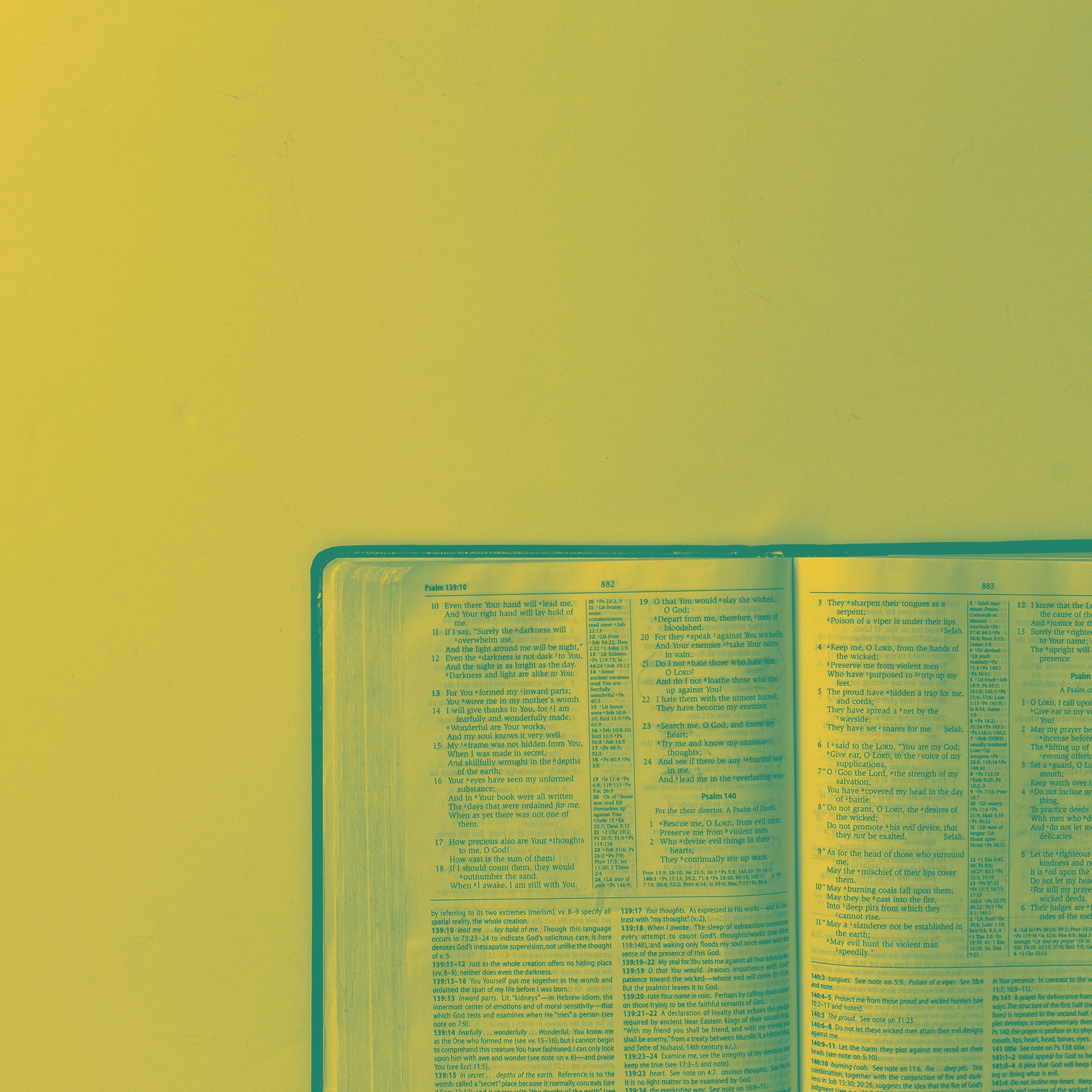
I don't know whether he was translating me or doing an impersonation of me, and you know what that would be like, but it worked, and so, it was a very, very rich time of ministry. Well, we're going to give ourselves this summer to the Psalms. I must admit that I have a special place in my heart for the Psalms, to help me to understand that maybe my struggles of faith are not unique. I love the multihued picture of the life of faith that's in the Psalms, of moments of great praise on one end, and on the other end, moments of question and doubt, times of great courage and times of fear, moments of victory and moments of defeat, moments that are deeply theological and moments where the Psalmist wonders, "God, what in the world are you doing?"
It's a great picture of the normal life of faith. If you look into the picture of the Psalms, you will find yourself there. You will find familiar things there that are familiar to you because they do really picture all of our walks with God. And we begin tonight with Psalm 1. And maybe the way I'd like to look at this with you is to kick off our look at this Psalm with a couple questions for you: "If you were going to write five or six or seven or eight statements that you think would summarize the world in which you live, what would you write?
Or if you were going to write a critique of the weaknesses of the philosophy of the culture in which you live, and again six or seven statements, what would you write?" This is a wonderful Psalm of hope and promise. But I would like to look at this Psalm as an interpretive lens with you this evening, maybe a different way of looking at Psalm 1 because there is a real way in which Psalm 1 really does summarize the life perspectives that are resident in every one of the Psalms. And I want to walk through the Psalms with you as if this Psalm is a God-given lens on the world in which you live, and therefore, it's a wonderful critique of the culture in which you live.
There's a way in which Psalm 1 is very, very modern although very ancient because it speaks with such power to the weaknesses of the culture that we live in. I'm going to make this statement again and again throughout our look at Psalm 1, framing each statement this way. Here's the first one. This is a summary of this Psalm: You live in a moral world; the world of Psalm 1 is a moral world. It's a world of right and wrong. It's a world of good and bad. It's a world of true and false. It's not a relativistic world where one perspective is just as valid as the other; one person's truth has as much legitimacy as another.
You would only need Psalm 1 in the Bible to decimate the relativism of Western culture. That relativistic world doesn't actually exist. This is a moral world. And that world of right and wrong reaches down to the practical places where we live; there's a right way to use the mentality that God has given you and a wrong way. There is a right way for a husband to treat a wife and a wrong way. There is a right way for a child to respond to a parent and a wrong way. There's a right way to use your time and your energy and a wrong way.
There's a right way to steward your resources and a wrong way. There is no place in your life that isn't moral. There is a moral call to all of us. There isn't anything that lives in some happy world of neutrality. That world actually does not exist, and Psalm 1 makes that very clear. There is a second thing that you're greeted with right away in the very first verse of this Psalm, Blessed is a man who walks not in the counsel of the wicked, nor stands in the way of sinners, nor sits in the seat of scoffers; but his delight is in the law of the LORD.
A World of Inescapable Influence
The second statement: You live in a world of inescapable influence. You live in a world where, every day somehow, some way, you are counseled because everything you encounter in that world moves the way it moves from the vantage point of some kind of worldview, some kind of perspective on life. The person who writes the news believes something. The person who writes the newspaper article has a perspective on life. The person who writes the television sitcom has a perspective on life. The musician who writes the lyrics has a perspective on life.
The politician has a perspective on life. Everywhere you go, you are counseled about a way of viewing your world; you must be aware of that. And embedded in that counsel is: This is the way to think. This is what you should desire. This is what you should do. It is inescapable. This is a world of incessant counsel. It's like sitting in a high school gymnasium, 5 minutes before the assembly starts, and everybody's talking at once. That's what it's like to live in our world. You're constantly getting bombarded with perspectives and views of life; there's nowhere to go to escape the counsel!
Every friend you have counsels you because they speak from the vantage point of a view of life. Now, here's what Psalm 1 does; Psalm 1 alerts us to the subtle but progressive influence of that counsel in these metaphors of walking, standing, and sitting. It's a picture of this counsel suddenly beginning to influence me, and I become more comfortable with its counsel, and before long, that counsel is the place where my mind is living. Are you aware that you are a person under influence? What a powerful thought that is.
And everywhere you go, that influence is there. It's inescapable. There's a third perspective here. Here it is: You live in a world where the choices and behavior of people are rooted in a deep-seated commitment to some kind of worldview. You live in a world where the choices and behavior of people are rooted in a deep-seated commitment to some kind of worldview. Now very important to consider, listen again: "Blessed is a man who walks not in the counsel of the wicked, nor stands in the way of sinners."
Now listen to the language: "...nor sits in the seat of scoffers; but his delight is in the law of the LORD." There are two words that give away how deep-seated our commitments are to the way that we view life. You have, on one hand, the scoffer; scoffing isn't a passive word; scoffing isn't a neutral word. That's a person who holds a worldview that, whether he's aware or not, has captured his heart ,and because of that, when he hears the truths of the existence of God, the plan and purposes of God, the grace of God, the eternity, he scoffs at that.
He mocks that. That is so far from anything that he thinks is true. On the other hand, what is the heart of a true believer? The heart of a true believer is not passive either. The heart of a true believer loves the Lord and loves His Word, finds delight in the truths of Scripture, finds delight in the truths of the grace of God, finds comfort and solace in that truth, and desires to know that truth, desires to be a student of it, desires not so much to master it, but to be mastered by it. Now hear this.
We don't have a world where we have your irreligious and religious people. We live in a world of deeply religious people. Everyone is making deeply religious, deep faith commitments. The question is, "Do they have a revelation basis to them. Are they based on the Word of God?" And maybe the way to say it is, "There are some people who are religiously irreligious, and there are other people who are religiously religious." But those commitments are deep and motivating. Maybe you could say that this Psalm is a Psalm of the heart.
Behavior Rooted in the Heart
Because what this Psalm reminds us of is that all of our behavior and all of our choices are rooted in the thoughts and motives of our heart. What we think and what we desire forms the way we respond to our world. And so, if you think there is no God and you desire to live a life of your own pleasure and your own comfort, then there will be a set of behaviors that flow out of that. And if you've submitted your mind to the truth of God and you find delight in His will and His way, those desires will lead you to live in a way that pleases Him.
But you and I, in this room, are not the only people who are making faith commitments. Everybody lives, not in an organized religious way, but in an everyday way with deep religious commitments that are formative of their lives, and they're passionate and motivated. And no one is actually passive, surely not as passive as people would depict themselves to be. What a powerful thought as we seek to understand ourselves and the world that we live in. There's a fourth perspective: You live in a world where the behavior of people leads to real consequences in the here and now.
Look what it says in verses three and four: He is like a tree planted by streams of water that yields its fruit in its season, and its leaf does not wither. In all that he does, he prospers. The wicked are not so, but are like chaff that the wind drives away. Galatians 6:7 says, "God is not mocked, for whatever a man plants, he will harvest." There is that inescapable seed-plant relationship in God's economy. It's crucially important, brothers and sisters, for us to embrace, that our words, our choices, our decisions, our behavior does matter.
It matters! I've had the experience many times in counseling to sit with a married couple that once had a very sweet relationship who now sit before me in scary acrimony. I sort of always know what I'm dealing with by the way a couple sits on the couch in front of me. It's a bit of a message when a husband and wife sit as far as they can on the other side of the couch without breaking the arm on the side. That tells you something. And I listen as they talk about one another, and you can see the deep hurt and the deep despondency and the cynicism and the bitterness.
And invariably, this question is asked of me, "How did this happen to us?" Don't you love the question? How did this happen to us? It is sort of as if, and I understand why people are there, and I don't mean this in a mocking way at all, but it's sort of as if a bad marriage is like a fog that you drive into. And you say, "Well, how did this happen?" And I'm always very aware that with the grace of the Lord Jesus Christ and pastoral wisdom, what I have to get this couple to own, and this is very sad, that they are actually harvesting the seeds that they've planted.
You can't violate again and again God's holy will for your marriage and experience God's blessing in that relationship. You can't act as if that relationship belongs to you and not the Lord. You can't treat another person anyway you like without consequences. And I think one of the most powerful lies of the enemy is...It won't make any difference. She knows you love her; he knows you love him, and that's not the world of this Psalm. It says that the person who delights in the law of God, who finds joy in His Word, who meditates on it so his mind and heart are formed by its truths, will respond to life in such a way that will prosper him.
Roots in the Soil of God's Wisdom
He is sending the roots of his soul down into the nutrient soil of God's wisdom and God's grace, and that will always produce a life of blessing. What an important observation! Listen! I want to make a confession. I don't always act as if my words and my behavior bear consequences, but they do. In the same way the wicked, you can't, you can't deny God's existence; you can't functionally repudiate His law without being like the chaff, that amazing picture of the grain of wheat that would be somehow smashed and then put in almost a level basket and in a place where there is a breeze, thrown up in the air, and the chaff would blow away because it's worth nothing and the grains of wheat would fall back down into the basket.
What a picture! What a scary thought that my life investments would end up as chaff. Wow! Again and again, I hope with pastoral love, I've opened Psalm 1 to people who are saying to me, "How did this ever happen?" And talk to them about the beauty of roots functionally sunk deep into the nutrient water of the grace and wisdom of the Lord and the danger of living as if I'm capable of writing my own law and depending on my own strength. You see, human beings were created for another. They were created to be dependent.
Isn't it amazing that Adam and Eve, immediately upon being created even though they're perfect people living in a perfect world, living in perfect relationship with God, God immediately comes and talks to them because they are not capable of figuring life out on their own. And they need to understand that they need to live in submission to the truth of God or their lives will not prosper. If that's true of Adam and Eve in that state of perfection, how much truer is it for us in this broken world?
But Psalm 1 is not done. Here is the fifth observation of this Psalm: You live in a world that's marching toward destiny, verse five: Therefore the wicked will not stand in the judgment, nor sinners in the congregation of the righteous; for the LORD knows the way of the righteous, but the way of the wicked will perish. We live in a world that has a beginning and an end. We live believing as believers in Scripture, in eternity, there will be a moment of judgment. The Scripture is very clear about that.
Scripture says things like we will give an account of every idle word. What a scary thought! That we serve a holy, righteous God who is judge over all things, and that radically changes everything you think about the here and now. If there is no eternity, if there is no judgment, then it's an open game. And what's the game? Get as much pleasure, get as much comfort, get as much power, get as much control as you can get in the here and now because it's all about the here and now. It's not all about the here and now.
We will stand before a holy God. There is a real heaven; there is a real hell. Ours is a holy God. How sobering! In a world that says, "Everything is okay. Maybe the only law is if you don't hurt somebody; (I don't know.) everything is okay." There is a judgment; "...the wicked will not stand in the judgment, nor sinners in the congregation of the righteous." Well, one final perspective: You live in a world that's inhabited by a God of righteousness and love. Therefore the wicked will not stand in the judgment, nor sinners in the congregation the righteous; for the LORD knows the way of the righteous, but the way of the wicked will perish.
Maybe you say, "Well, Paul, that's no comfort for me because after hearing all that you said so far, I don't know if I can stand before God and say, 'I'm righteous.'" But I would remind you that this Psalm was written in a time where constant sacrifices were made for the atonement of sin. What did that sacrificial system recognize? It recognized the sinfulness of every human being, and because of the sinfulness of every human being, the impossibility of finding acceptance with God based on my own righteousness.
The Ultimate Sacrifice
And that sacrificial system pointed every day in sacrifice after sacrifice after sacrificed for the need of an ultimate sacrifice that would satisfy the anger of God. And so, God sent His Son, the Savior, the King, Emmanuel, the Priest, the Perfect Lamb of God. He lived an utterly, completely, righteous life for you and for me. He faced torture and death as that Perfect Lamb for you and for me. He conquered death for you and for me, so that in His life, in His death, and in His resurrection, shockingly, we could become the righteousness of God.
What an amazing thing that although I can never achieve righteousness on my own, that righteousness of Christ is given over to my account, and I stand before God unafraid, excepted by Him. Praise God! Praise God! Praise God! This Psalm cries for the Lamb. It finds its hope in a righteousness that is not a righteousness of human wisdom and human strength, but is righteousness that is only ever found in the Person and work of the Lord Jesus Christ. And this holy God, (Hear this; this is so glorious.) this holy God knows every one of His own.
And all of us who have been covered by the righteousness of Christ will be welcomed into His presence for eternity. He will say, "Come! Come! Come!" And broken and lame and dirty and scarred will come, and we will be like Him, and we will dwell with Him forever and ever and ever and ever. Praise be to the name of our Lord. Why is Psalm 1 important for us to admit? ...because you and I must live this Psalm. We must be daily aware of its perspectives. I would ask you this evening, "Has that counsel influenced you, that's everywhere around you?
Are there ways in your daily functioning, in your situation and relationships at work, at your university, in your friendships, in your marriage, in your neighborhood, are there ways where you live in choices and decisions in ways that are inconsistent with these perspectives because you have been influenced by that counsel?" Psalm 1 would call us back to delight in the law of God, sending our roots deep into the soil of the wisdom of the Lord and the bounty of His grace. This Psalm is important for us because, as I studied this Psalm, it renewed in me a call to this city.
Brothers and sisters, I think we can say this with humility, "This city needs us, needs people who believe that this is a moral world, that there is truth and there is falsehood, that this world is marching toward destiny, that there's a God of righteousness and love, that what you believe and what you do does make a difference. Listen! It's not okay that people are living, repudiating everything for which they were created. They were given life and breath for the glory of their Creator. It ought to shock us and sadden us...How many people around us, not only do not live for His glory, they don't acknowledge His existence.
That should move and motivate us to look for every opportunity we can have to introduce them to the stunning wisdom of the law of the Lord and the life-altering comfort of the message of His grace. God help us to be energized and moved. This is a moral world. There is a righteous way. May we be moved; may we be moved. Let's pray: Thank you, Lord, for this wonderful, wonderful Psalm, six verses. And yet, we could meditate on its truths for an eternity. Who is a God like our God? Who has Your wisdom?
Who has Your righteousness? Who is love like You are? May we live in the details of everyday life in a way that recognizes You, and may we weep for our community that sadly lives so often as if You do not exist. Move and motivate us, we would pray. In Jesus name, Amen.