Paul Tripp: Is your sense of identity accurate or is it distorted? Are you living with Biblical clarity when it comes to telling yourself who you actually are?
Kate Crowley: Welcome to Right Here, Right Now and today's program from Paul Tripp Ministries. Join us as Paul connects the transforming power of Jesus Christ to everyday life.
Paul Tripp: I have to tell you a rather embarrassing story. It is a bit humbling to reveal to you the pomposity of my theological knowledge. I hope I've moved beyond this.
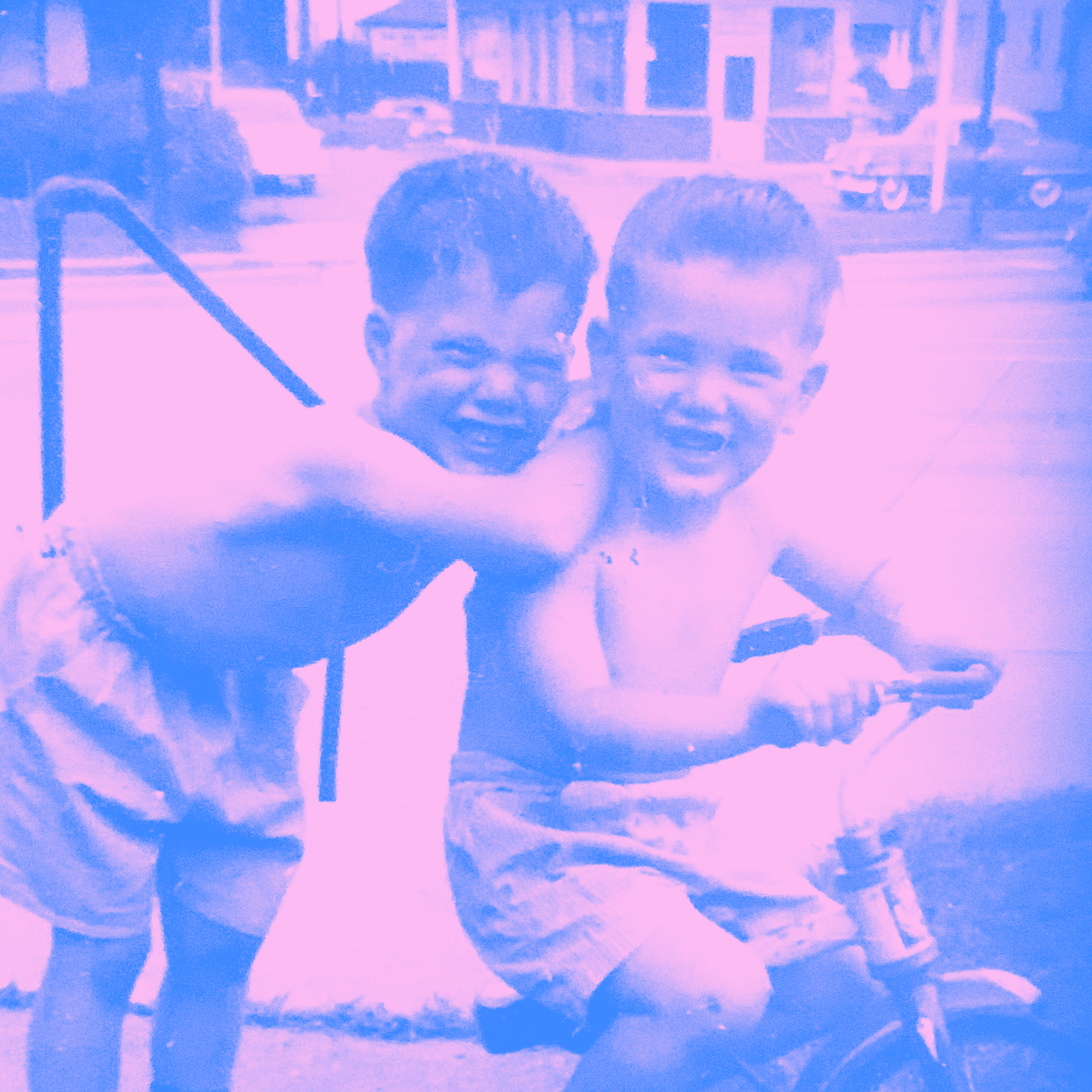
My son, Justin, was just a little guy, maybe three or four-years-old, and this was a kid who loved life in all of its dimensions. But he was particularly attracted to what he called creatures; animals to the rest of us. He loved creatures - snakes, bugs, rodents, large animals - he loved them all.
And he came bouncing into my room one day and said that he decided what he was going to be when he grew up. I couldn't wait to hear what this fertile mind would come up with next.
I said, "Well, Justin, what do you want to be when you grow up?"
And with a great big smile on his face, he said, "Dad, when I grow up, I want to be a lion!"
Immediately upon hearing his answer, I was sure that it was something drastically wrong with my son's sense of identity, so I thought this was a great opportunity to get theological with him.
I spent an inordinate amount of time with a little boy talking about how he was different from the animals because he was made in the likeness of God. I was quite proud of myself for having such a deep theological conversation with such a little boy.
So I said to Justin, "Do you understand what daddy has been talking about?"
And he answered, "Yes daddy...when I grow up I'll be a giraffe."
Now, I want you to hear me say this: I think there are many of you listening who suffer from an identity confusion that's much like Justin's. No, I don't mean that you think you're an animal; what I mean is, you don't fully understand who you are.
Music: "Talk With God" by Stevie Wonder
There are people who have let the problems of today
Lead them to conclude that for them life is not the way
But every problem has an answer and if yours you cannot find
You should talk it over to Him; He'll give you peace of mind
When you feel your life's too hard, just go have a talk with God
Kate Crowley: This is Right Here, Right Now and today's topic dealing with identity in relation to the Gospel from Paul's series, "What in the World Is the Gospel Anyway?"
There's more coming from Paul Tripp. As you get ready for today's broadcast, go ahead and call a friend and invite them to join us. And don't forget that, at any time during the program, you can log onto paultrippministries.org where you can pick up a copy of Paul's book War of Words, an in-depth look at how words can deeply impact your life.
While there, you can also check other important matters including video, audio, and print resources dealing with marriage and parenting. That's paultrippministires.org. And now, Right Here, Right Now continues with Paul Tripp.
Do You Really Know Who You Are?
Paul Tripp: Do you really know who you are? Well, we want to take a second step in our unpacking and understanding the Gospel, the good news of the Lord Jesus Christ today.
In the last program, we talked about the how the Gospel is a story, the one story that can make sense out of every story of every person who has ever lived. But I want you to hear me say this now: the Gospel is not just a story; it is also an identity.
Now grasp the practical importance of this. As human beings, we are always assigning to ourselves some sense of identity. That's what you see being formed in that precious little fertile mind of my son.
And although I had good theological things to say to him that really came out of the Gospel, he was way too young to understand those. And I loved the opportunity of theologizing with him although it made no sense to him. Again, you're always living out of some sense of identity.
Now, some of us get our identities from our families. I'm a Tripp, and somehow, some way, that locates and defines me. Some of us get our identity from our jobs. We'll say, "I'm a doctor," or "I am a lawyer," or "I'm a musician."
Or, some of us get our identity from our achievements. We'll say, "I'm a Rhodes scholar," or "An NCAA athlete" "A mountain biker," etc. Some of us get our identity from our nationalities, "I'm Italian," or "I'm Cuban," or "I'm German." Some of us get our identities from the communities we belong to, "I'm a union guy, I'm a Republican, I'm a Southerner," or whatever.
Some of us get our identities even from our problems, we'll say, "I'm divorced," or "I'm depressed" or "I'm a single mom." The point is this - you're always living out of some sense of identity, and the identity that you assign to yourself really does shape the way you think about and respond to life.
Now the Gospel is not just about the drama of sin and redemption--it surely is that. The Gospel is not only about knowing who you were created to be; but the Gospel is about being given a brand-new identity that is given to everyone who believes.
Now, I want you to go back to the beginning because remember, the Bible is this origin-to-destiny story; the Gospel is the origin-to-destiny story that is recorded in the Bible.
It's very clear as you read Genesis 1 and 2 particularly, that Adam and Eve were created to get their fundamental sense of identity vertically and not horizontally. It was their relationship with God, their sense of their place in the plan of God that would give them their ultimate sense of who they were as human beings.
Now, what happens to us is, because we're identity amnesiacs, because we don't get our identity vertically, then we seek to get our identity horizontally in a fallen world; and that never fully works because all the things we seek to get identity from will fail us in some way. You can live out of a brand-new sense of identity.
Music: "Too Many People" by Pet Shop Boys
I sometimes think that I'm too many people
Too many people, Too many people
I sometimes think that I'm too many people, too many people, too many people at once
The husband or the hedonist
The businessman or the communist
The artist or the showbiz creep
The lover or the nervous geek
The question of identity is one that's always haunted me
Whoever I decide to be depends on who is with me
I sometimes think that I'm too many people
Too many people, Too many people
I sometimes think that I'm too many people, too many people, too many people at once
The Gospel Is the Drama of Identity
Paul Tripp: There is a real way in which the drama of redemption that is the Gospel story is at the very same time the drama of identity. This origin-to-destiny story that's recorded on the pages of Scripture is, in fact, the story of the drama of identity given, the drama of identity lost, and the drama of identity regained. Let me unpack that for you.
There are really four identities in the Gospel. The first is the identity that all people have as creatures. I need to understand that I am a creature of God. Now that immediately means this: that God was on-site before I was, that this world belongs to Him, and that not only does this world belong to Him, I belong to Him.
That means life is not about my plan and purpose; life is not about my will and my way. I was meant to submit everything I do and everything I say to the plan and purpose of the Creator God who owns me. What an important sense of identity that is.
Now, that means that I am not an autonomous, independent human being with the right to do whatever I want to do; I'm not a self-sufficient human being with everything within me to do what I was meant to do. No, I am a dependent human being, dependent on God in order to live the life I was created to live. I am a creature of a God who has a will; who has a way; who has a plan. Successful life is living inside of the borders of the Creator God's plan.
Second identity that all human beings will carry in some way is the identity as a sinner. David says it in a powerful way, "Behold, I was shapen in iniquity, and in sin did my mother conceive me."
What this identity as sinner says is that there is a deep, abiding flaw inside of me that literally does reach to every aspect of my personhood. And that flaw is called sin. Sin distorts my thoughts; it misdirects my desires; it weakens my resolve; it harms my abilities.
What it means to say that I'm a sinner is something that's phenomenal, something that's profound. It means this: that no matter what I face in this world, no matter how blessed or hard my life is, my greatest, deepest, most comprehensive, most abiding problem in life exists inside of me and not outside of me.
I'm a sinner, and I need help; because in all of my effort, and all of my education, and all of my relationships, and all of my good intentions, I am not able to escape the dilemma of indwelling sin. It's marked me! I'm flawed; I'm damaged; I need help. So I'm not only creature, I'm sinner.
But there's a third identity that is there in the Gospel that all human beings carry. It's the identity as sufferer. I never get to live in a perfect world. The crystal of that perfect world that was created by a dramatically artistic God, was shattered in the disobedience of Adam and Eve.
And so, we all live in a broken world; we all live in a fallen world; we all live in a damaged world, and that world does not operate the way it was meant to operate; and because it doesn't operate the way it was meant to operate, we are all harmed by its brokenness.
We deal with things like racism and disease. We deal with being sinned against by other people in their greed and their anger, their lust for power, and control, and sex, and money, and all of those things.
We damage others; they damage us; we live in a world where suffering is the universal experience of every human being in some way. The only difference between us is the size, the length, the character of our suffering. We live in a world that groans. As Don Miller says in his book, Blue Like Jazz, groaning is the default language of human beings this side of eternity.
I have the identity as creature. I have the identity as sinner. I have the identity as sufferer. Now, there's a fourth identity that is the hope of the Gospel. And this identity isn't shared by all humanity. It's the identity of child. What kind of child? Child of God.
It's my identity in Christ; it's the welcome into the family of God that is the result of the justifying work of the Lord Jesus Christ. He not only forgives me, He not only paid the penalty for my sin, but He welcomes me into His family with all the rights and privileges of being His child. I'm a child of God! The work of Christ is not just forgiveness; the work of Christ is really giving me a brand new identity that is to reach into every aspect of my life.
Creature. Sinner. Sufferer. Child. The four identities of the Gospel. Now, I would ask you, "Do you know the practical implications of each one of those four identities in your everyday life? Is your sense of identity accurate or is it distorted? Are you living with Biblical clarity when it comes to telling yourself who you actually are?
Music: "Fairest Lord Jesus" by Glad
(Words translated by Joseph A. Seiss/Arrangement by Richard S. Willis)
Fairest Lord Jesus! Ruler of all nature,
O Thou of God and man the Son!
Thee will I cherish,
Thee will I honor,
Thou, my soul's Glory, Joy, and Crown!
2 Peter 1:3-9 and Your Identity in Christ
Paul Tripp: Now I want to refer you to a particular passage in the New Testament in the Bible. It's II Peter 1:3 through 9. Now, I'm not going to take the time to read that passage; mark it in your memory, II Peter 1: 3-9, because it would be great if you could look later at that passage and see it's full import.
Now, the reason I want to connect you to this passage is because I'm sure there are those of you out there who are listening who, you sort of get the concept that you live out of an identity, and you sort of get the concept that your sense of identity shapes the way you live, but you really don't know practically what that means.
This passage really does that. The passage is essentially a diagnostic. Peter proposes that there are people who say that they're believers, but whose lives, and I've shared this passage with you before, are ineffective and unproductive. What does that mean? It means their lives are not producing the expected fruit of faith that you would expect to see in a believer. And when Peter unpacks the reason, he essentially says this, "That they are nearsighted and blind, having forgotten that they've been cleansed from their past sins."
Here's what Peter says. The reason these people are ineffective and unproductive is because they simply don't know who they are. You see, if you don't know who you are, you'll be ineffective and unproductive as a citizen. If you don't know who you are, you'll be ineffective and unproductive as a neighbor.
If you don't know who you are, you'll be ineffective and unproductive as a friend. If you don't know who you are, you'll be ineffective and unproductive in your marriage. If you don't know who you are, you'll be ineffective and unproductive in your personal life. If you don't know who you are, you'll use your finances, your leisure time, your energies, your schedule in ways that are ineffective and unproductive.
If you don't know who you are, you'll be ineffective and unproductive in your church. You'll just be a person who, because you don't know who you are, you're never quite able to be what you're supposed to be and do what you're supposed to do. Ineffective and unproductive.
Now, who are we? Well, Peter says it in this phenomenal way. He says that "His divine power has given us everything we need for life and godliness." Peter says this. "Do you understand your identity?" Here's your identity. In the Gospel story, in the person and work of the Lord Jesus Christ, you literally have already been given everything you need to face what is on your plate in this broken world that you live in, right here, right now.
Now if you get that identity, if you really do understand what it practically means, it will radically transform the way you live in all the dimensions of your everyday life. Ineffective and unproductive people are ineffective and unproductive because they just don't know who they are.
(Music Interlude)
Paul Tripp: Now, I don't want you to be offended by this question, although I think it would be great if you'd be stimulated by the question. Is your life all too similar to little Justin? Think about this. Justin's problem, the reason why he said he wanted to be a giraffe, is that he just lived in the middle of identity confusion as a little boy.
So I would ask you, "Is your life shaped by identity clarity, the kind of clarity that only the four identities of the Gospel can give you or identity confusion? Do you live as creature, sinner, sufferer, child? Do you get the import of those, the definition of those, how those diagnose your everyday life? And do you really live out of the potential that is or that could be yours in Christ?"
We're going to talk about this more, but you're always measuring your potential. What gives you your sense of potential? Your track record? The size of the problems that you face? Your new identity means a whole new potential.
As you begin to think of yourself out of the Gospel, you'll think of yourself in brand-new ways, and there will be new desires, and new thoughts, and motivations in your heart. If you are one of God's children, I would ask you one question: Are you practically grasping and living out of your identity in Christ? Are you living out of the hope, out of the courage that only this identity can give you?
Kate Crowley: The Gospel is an identity. Paul Tripp from his current series, "What in the World Is the Gospel Anyway" on Right Here, Right Now.
If you'd like to rehear today's talk or share these words of hope with a friend, you can order a CD online. Just go to paultrippministries.org. CD copies are available for just five dollars. While you're there, check out Paul's book, War of Words. In it, Paul looks at the power of words, both for good and bad, a book that will make you think before you speak. That's a War of Words, available at our website, paultrippministries.org.
And be sure and check out Paul's blog updated regularly. Again, paultrippministries.org. That's all one word, Paul Tripp, spelled T-R-I-P-P, paultrippministries.org. You can order from the website or call us at 1-800-551-6595. That's toll-free: 1-800-551-6595.
Now, if you'd like to share the truths that you've heard today on Right Here, Right Now with others, we invite you to partner with us financially. You can help by clicking on 'Ministry Support' at paultrippministries.org or write to us at 7214 Frankford Avenue, Philadelphia, Pennsylvania 19135. And if you'd like to invite Paul to your church or special event as a guest speaker, just go online for more information.
Next time we're together, Paul continues his compelling new series, "What in the World Is the Gospel Anyway?" For Paul Tripp and all of us at Paul Tripp Ministries, I'm Kate Crowley, reminding you that, in Jesus Christ, there really is help, right here, right now.